




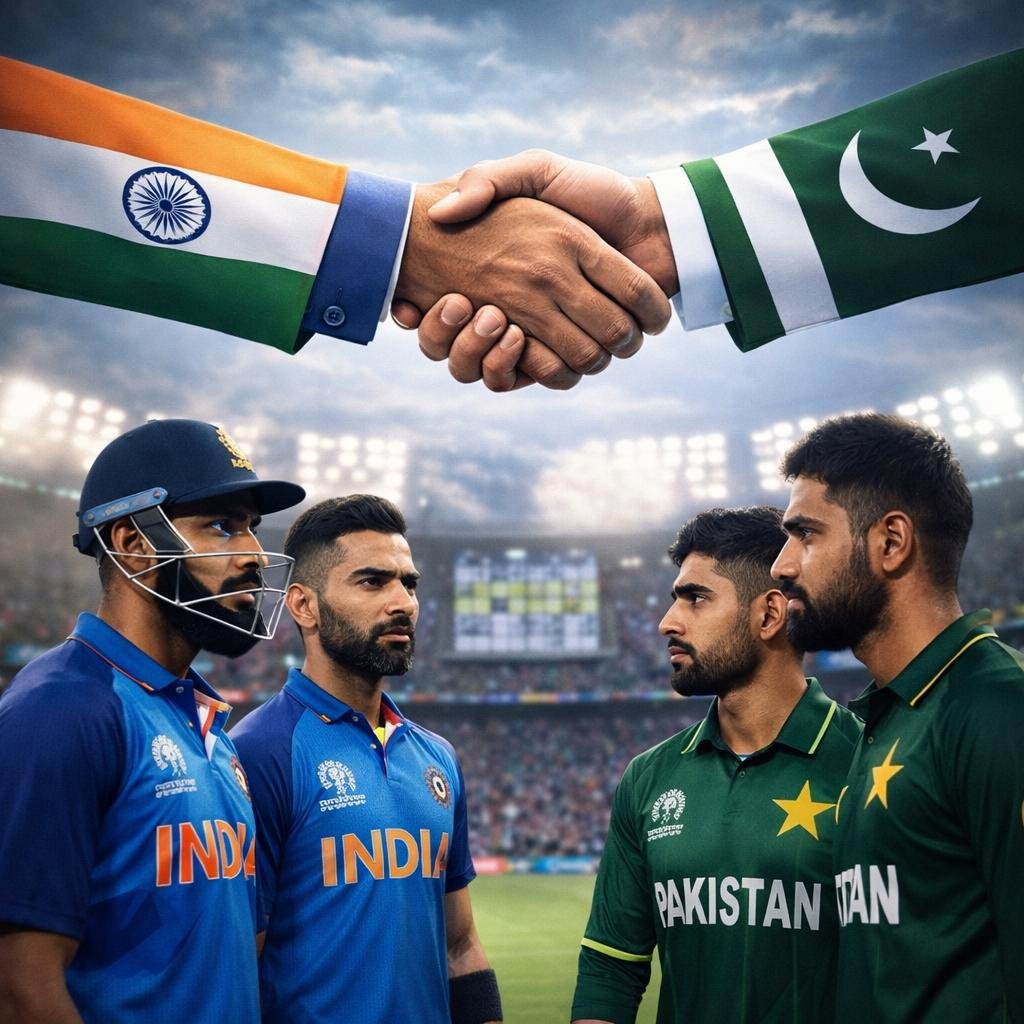
The upcoming India–Pakistan clash scheduled for 15 February 2026 in Colombo is officially a cricket match yet in reality it resembles a carefully negotiated political event. The weeks leading to the fixture have revolved less around batting line-ups or bowling strategies and more around boardroom negotiations, diplomatic signals and commercial calculations. The game, once celebrated as a spontaneous sporting rivalry, increasingly appears choreographed by forces beyond the field.
What unfolded before this match reflects a deeper structural issue within international cricket. Pakistan’s brief boycott threat — framed as solidarity with another nation and protest against perceived inconsistencies in international cricket governance — momentarily exposed the uneven power equations that have long existed in the sport. The swift reversal of that stance, however, also revealed an uncomfortable truth: in modern cricket, moral positions often collide with financial realities and revenue almost always prevails.
At the heart of this episode lies commercial interdependence. India–Pakistan matches are not merely sporting contests; they are global media events generating extraordinary viewership and advertising income. Broadcasters, sponsors and governing bodies rely heavily on this single fixture to anchor entire tournaments. This economic gravity turns one match into a financial pillar, making cancellation almost unthinkable regardless of political tensions. The sport thus finds itself trapped in a paradox — preaching neutrality while being driven by revenue imperatives.
The confirmation of the match has been hailed in some circles as “cricket diplomacy,” yet the peace it represents is delicate and transactional. Underlying disputes regarding bilateral series, venue policies and revenue distribution remain unresolved. What appears as harmony on the schedule often masks unresolved friction beneath it. Cricket survives but the rivalry becomes curated rather than organic — permitted only within controlled, commercially secure environments.
For fans, the excitement is undeniable. The spectacle of two historic teams facing each other still ignites emotion across continents. Yet a subtle question now shadows the anticipation: is the contest a celebration of sport or a negotiated performance shaped by politics and profits? When cricket is allowed to flourish only under strict financial and diplomatic calculations, its authenticity inevitably comes under strain.
This match will deliver runs, wickets and memorable moments but it also carries a broader message about the evolving nature of international sport. Cricket today is no longer insulated from geopolitical realities; it mirrors them. The challenge ahead is not merely to keep the rivalry alive but to preserve the integrity of the game itself — so that future contests are remembered for their sporting brilliance rather than the negotiations that made them possible.