




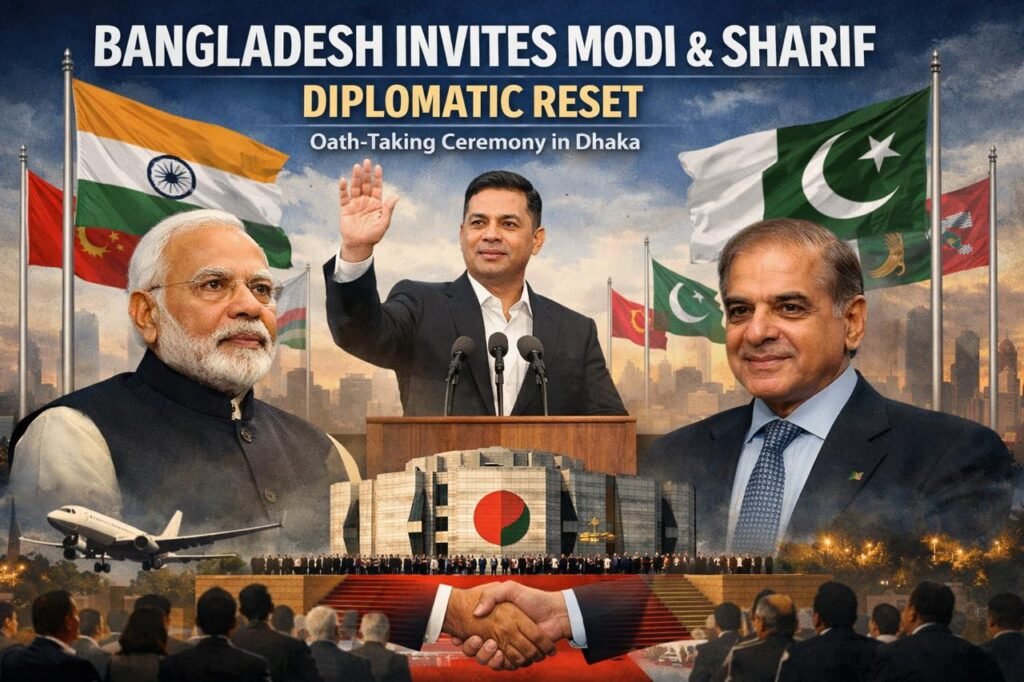
Bangladesh’s incoming government led by Tarique Rahman has invited Indian Prime Minister Narendra Modi and Pakistani Prime Minister Shehbaz Sharif to its 17 February 2026 oath-taking ceremony, following the Bangladesh Nationalist Party’s landslide electoral victory and the 2024 exit of Sheikh Hasina. Though ceremonial yet the outreach is being read as an early signal of Dhaka’s intent to recalibrate regional diplomacy.
Attendance Optics: Modi is unlikely to attend personally due to prior international and domestic commitments with India expected to send a senior representative. Sharif, however, is widely expected to be present, potentially marking the highest-level Pakistan–Bangladesh engagement in over a decade. Invitations have also gone to leaders from China, Saudi Arabia, Türkiye and other South Asian states broadening the event’s diplomatic weight.
Strategic Signals:
•India: The gesture reassures New Delhi that political change in Dhaka does not equal strategic drift, aiming to preserve cooperation on security and connectivity.
•Pakistan: Expected attendance opens space for cautious re-engagement after years of subdued ties.
•*Balanced Foreign Policy*: Rahman’s “friends to all malice to none” approach often framed as “Bangladesh First”—suggests diversification of partnerships among India, China, Pakistan and Gulf economies.
•Regional Platforms: A shared stage for rival South Asian leaders could soften rhetoric and revive dialogue on trade and security.
Broader Context: With South Asia facing economic pressures and geopolitical realignments, Bangladesh is leveraging its electoral mandate and geographic position to project neutrality and strategic autonomy. The ceremony’s true impact will depend on follow-up diplomacy but symbolically it positions Dhaka as a potential convening ground rather than a partisan player in regional politics.