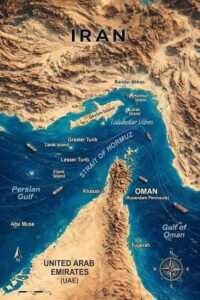




Around a quarter of the world’s seaborne oil trade passes through the Strait of Hormuz, a narrow waterway roughly 30 miles wide that connects the Persian Gulf to the Gulf of Oman. This strategic passage is one of the most critical maritime chokepoints in the world, where any disruption can send shockwaves through the global economy.
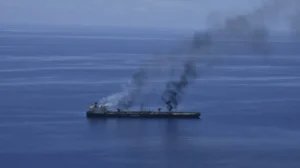
Recent tensions in the Middle East have once again highlighted its vulnerability. As conflict affects nearby regions shipping routes through the strait face increasing risk raising concerns over global oil supply and price stability.
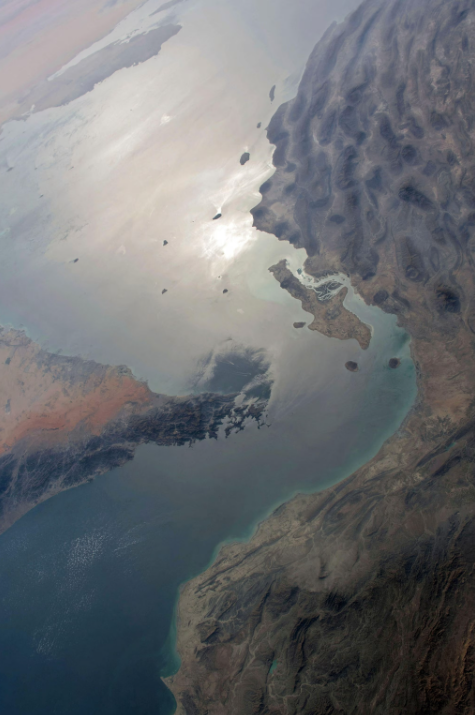
Beyond its strategic importance, the region is also a remarkable geological site where the collision of two continental plates is visible. This process has shaped the landscape over millions of years.
Evidence of this can be seen across the region, particularly in the Zagros Mountains of southern Iran. At the narrowest point of the strait, the Musandam Peninsula extends sharply into the water forming steep cliffs and a rugged coastline with flooded valleys.
The area also exposes rare geological formations known as ophiolites, rocks that are usually found deep beneath the ocean floor but are visible at the surface here. This makes the region one of the most significant geological sites in the world.
The formation of the Strait of Hormuz began around 35 million years ago with the collision of the Arabian and Eurasian tectonic plates. At that time, an ancient ocean called the Tethys Ocean separated the two landmasses.
As the Arabian plate moved northward, it pushed beneath the Eurasian plate in a process known as subduction. Over time, this movement closed the ancient ocean and created mountain ranges such as the Zagros.
At the same time, pressure from this collision caused parts of the Earth’s crust to bend and sink forming depressions that later filled with water. This process led to the creation of the Persian Gulf and the Strait of Hormuz.
Today, the same geological forces that formed this narrow passage also contribute to its vulnerability. As a key route for global oil shipments, even small disruptions can have major economic consequences.
Like other major chokepoints such as the Bab el-Mandeb, the Strait of Hormuz remains essential for global trade. Its importance in energy transport and its sensitivity to geopolitical tensions make it one of the most closely watched waterways in the world.
Keywords:
Strait of Hormuz importance, global oil chokepoints, Middle East shipping routes, oil trade routes world, Persian Gulf oil supply, geopolitics Strait of Hormuz, Bab el Mandeb chokepoint, global energy security, tectonic plates collision Iran, Zagros Mountains formation, oil supply disruption 2026, maritime trade risks
Asian Burg Editorial Desk
Send your feedback via email info@asianburg.com