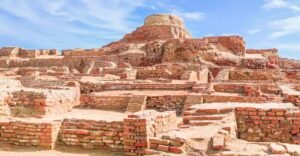




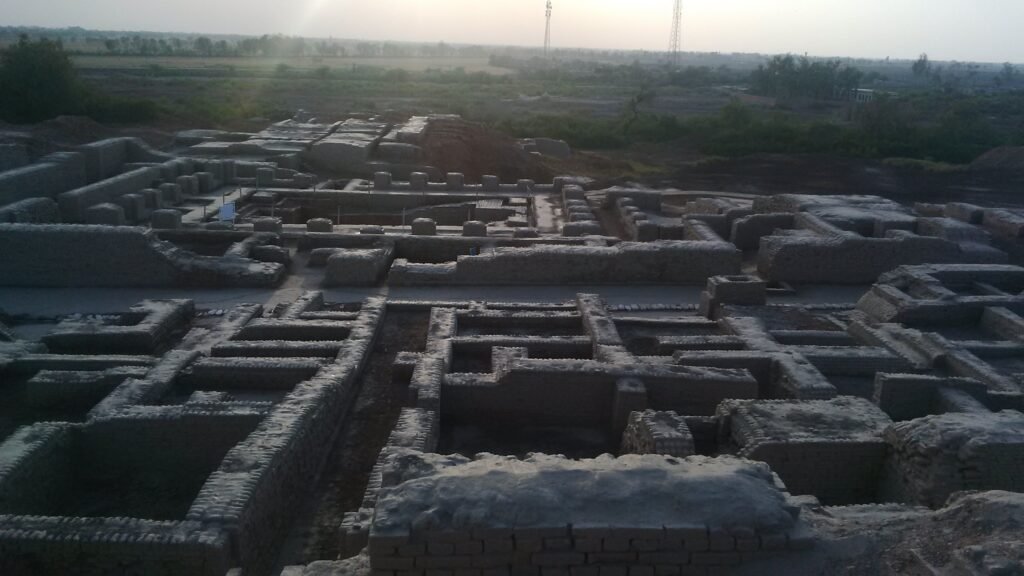
Recent excavations at Mohenjo-daro, the iconic city of the Indus Valley Civilization, suggest that its origins go back as far as 3300 BC making it older and more complex than previously understood. This discovery reshapes how historians and archaeologists view the rise of urban centers in South Asia placing Mohenjo-daro alongside the earliest cities of Egypt and Mesopotamia in terms of antiquity and sophistication.
Located in Sindh’s Larkana district along the Indus River, Mohenjo-daro once covered more than 620 acres and may have housed up to 40,000 people at its peak. Despite its prominence, the city’s earliest phases remained uncertain until now. As per research reported by Dawn and confirmed through radiocarbon dating of samples collected during 2025–2026 excavations, Mohenjo-daro was already inhabited during the Early Harappan (Kot Diji) phase between approximately 3300 and 2600 BC.
The excavations, led by Dr. Asma Ibrahim, Ali Lashari and US archaeologist Dr. Jonathan Mark Kenoyer, revisited a large mudbrick structure west of the Stupa Mound, first uncovered by Sir Mortimer Wheeler in 1950. While Wheeler interpreted it as a flood control embankment, new analysis shows it was a multi-phase city wall expanded over centuries. Radiocarbon dating indicates that the earliest sections of the wall date to around 2700–2600 BC, and deeper layers revealed Kot Diji style pottery confirming a significant settlement predating the Mature Harappan urban phase.
These findings indicate that Mohenjo-daro did not emerge suddenly as a fully formed city but developed gradually from earlier communities. The evidence aligns with discoveries at Harappa, where early fortifications also predate the Mature Harappan period. Later layers of the city wall belong to the Mature Harappan phase reflecting sustained urban planning, construction and resource management up to at least 2200 BC.
Beyond the city wall, Mohenjo-daro continues to yield insights into its long-term significance. Excavations have uncovered Kushan-era coins dating from the 2nd to 5th centuries AD highlighting the site’s continued use and cultural relevance centuries after the decline of the Indus Civilization.
What sets Mohenjo-daro apart is not only its age but its level of urban sophistication. The city is known for its standardized baked bricks, planned streets, advanced drainage systems and monumental structures such as the Great Bath. However, the Indus script, found on seals and tablets, remains undeciphered making these material and scientific findings crucial for reconstructing its history.
As per studies by international archaeologists involved in the project, Mohenjo-daro represents a multi-phase evolution of urban life rather than a sudden emergence. This perspective positions the city as a living laboratory of early urbanism, where ideas about planning, infrastructure and social organization were tested and refined over centuries. Ongoing excavations, radiocarbon dating and structural mapping promise to reveal even more about this ancient urban center and its role in the broader Indus Valley Civilization.
Keywords:
Mohenjo-daro 3300 BC, Early Harappan city, Indus Valley Civilization, Mohenjo-daro excavation 2026, Kot Diji pottery, ancient urban planning, Indus cities history, Mohenjo-daro research news, archaeology Pakistan, radiocarbon dating Mohenjo-daro
Asian Burg Global Desk