




Pakistan’s economy may face renewed pressure as unseasonal and persistent rains threaten to derail this year’s wheat production, particularly in Punjab and Khyber Pakhtunkhwa, the country’s key agricultural regions.
While early rainfall before and after sowing had raised expectations for a strong harvest, continuous downpours during the harvesting period are now causing serious concern among farmers. Experts warn that excess moisture at this stage can damage crops, delay harvesting and reduce both yield and quality.
The wheat harvesting season typically begins in early March, with initial arrivals recorded by late February as farmers prepare fields for the next cotton crop. However, ongoing adverse weather has disrupted this cycle.
According to the Pakistan Meteorological Department, another spell of stormy weather is expected between April 5 and 9 due to a western disturbance moving across the region. In recent days, heavy rainfall, hailstorms and strong winds have already damaged standing wheat crops in the plains of Punjab, as well as fruit crops in northern and hilly areas.
Agricultural experts note that while rain benefits wheat during its early growth stages, it becomes harmful during harvesting. Wet crops cannot be processed efficiently through threshing machines and require drying, which can take at least a full day under sunny conditions or longer if damp weather persists.
Repeated exposure to rain can further deteriorate crop quality, affecting grain moisture levels and sometimes causing discoloration. Farmers also face logistical challenges, as harvested bundles are often left in open fields making them vulnerable to further rainfall.
With wheat being a critical staple crop, any decline in output could have broader economic implications. The government has set a production target of around 30 million tonnes for the Rabi season 2025–26, following last year’s output of approximately 28.42 million tonnes, which exceeded the initial target.
The target was approved by the Federal Committee on Agriculture, which also outlined policies aimed at ensuring fair support prices for farmers to help cover production costs and maintain profitability.
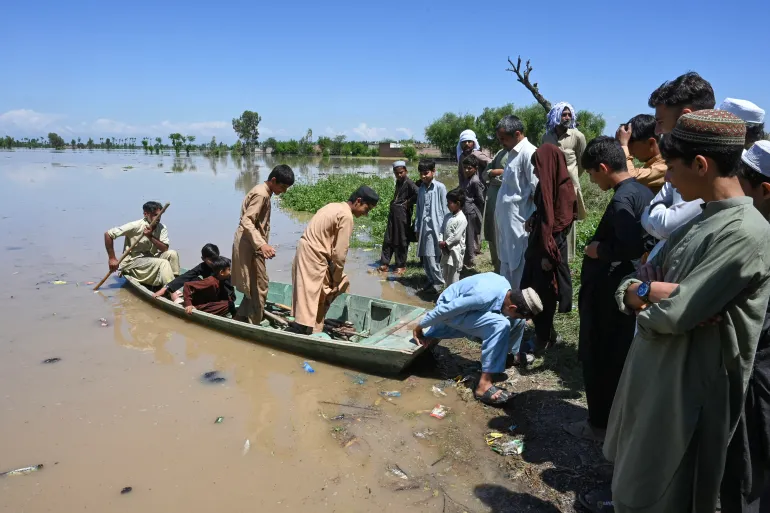
Officials say a clearer assessment of crop losses will be available once field estimates are finalized by the Ministry of National Food Security. Meanwhile, the ongoing rains have also resulted in casualties and damage to infrastructure across multiple provinces.
Authorities continue to work on improving weather forecasting systems to better inform farmers. However, experts emphasize that timely guidance from agricultural departments is essential to help growers protect their crops during extreme weather events.
The recent drop in temperatures across Punjab and Sindh has further complicated conditions with continued rainfall reported in several districts adding to the risk of damage to standing and harvested wheat crops.
Keywords:
Pakistan wheat crop 2026, unseasonal rains Pakistan, wheat production target Pakistan, Punjab agriculture news, PMD weather forecast Pakistan, wheat harvest damage rain, Pakistan economy agriculture, Rabi season wheat Pakistan
Asian Burg | Agriculture & Economy Desk
Send your feedback via email info@asianburg.com