




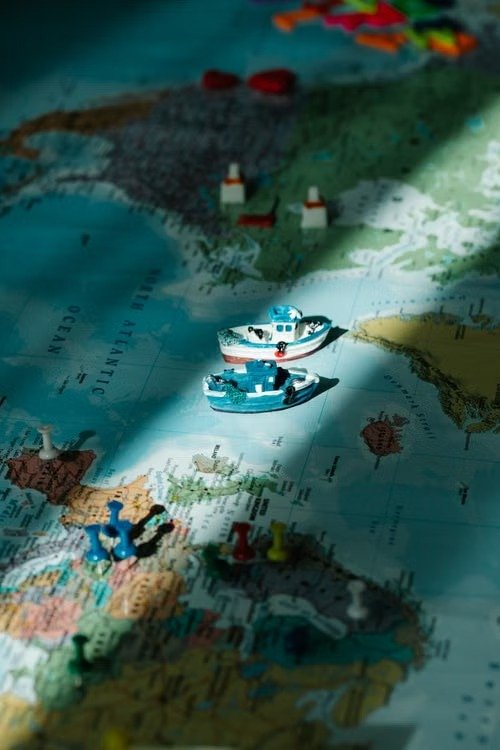
Global trade and energy security depend heavily on a few critical maritime routes known as straits. These narrow waterways connect major oceans and seas making them vital for international shipping, military movement and economic stability. Here are seven of the most important straits shaping global geopolitics today:
The Strait of Hormuz is one of the most crucial energy corridors in the world linking the Persian Gulf with the Gulf of Oman and the Arabian Sea. Positioned between Iran and Oman, nearly 20% of global petroleum passes through this narrow passage.
The Strait of Malacca connects the Indian Ocean to the South China Sea and lies between Malaysia, Singapore and Indonesia. It is especially vital for China, as a large portion of its trade and energy imports pass through this route.
The Strait of Gibraltar links the Atlantic Ocean with the Mediterranean Sea, situated between Spain and Morocco. It serves as a key gateway between Europe and Africa.
The Bering Strait connects the Arctic Ocean with the Bering Sea and separates two global powers the United States and Russia.
The Strait of Dover is the narrowest section of the English Channel lying between United Kingdom and France. It is one of the busiest shipping lanes in the world.
The Bosporus Strait connects the Black Sea to the Sea of Marmara and holds unique geopolitical importance as it separates Europe from Asia within Turkey.
Finally, the Taiwan Strait connects the South China Sea with the East China Sea and lies between China and Taiwan making it one of the most sensitive geopolitical flashpoints today.
Keywords: global chokepoints, Strait of Hormuz, Strait of Malacca, Gibraltar Strait, Bering Strait, Bosporus Strait, Taiwan Strait tensions, maritime trade routes, global shipping lanes, geopolitical waterways
Asian Burg | Global Desk
Send your feedback via email info@asianburg.com