




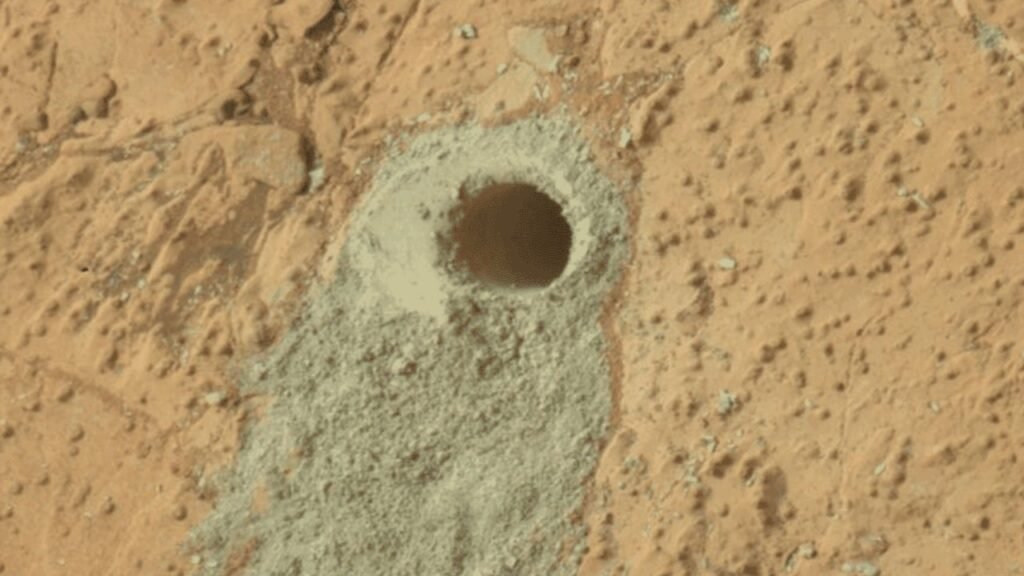
The Curiosity rover has discovered the most diverse set of organic molecules ever found on Mars including several compounds never previously detected on the planet.
The discovery was made through a first of its kind chemical experiment where a Martian rock sample was dissolved and analyzed onboard the rover. The results were published in Nature Communications.
Scientists identified 21 carbon-based molecules including nitrogen-containing structures that are considered precursors to DNA and RNA, the fundamental building blocks of life on Earth.
Researchers believe these organic compounds have been preserved for around 3.5 billion years suggesting that ancient Mars may once have had conditions suitable for life.
However, scientists stress that the discovery does not confirm past life, as the molecules could have formed through non-biological processes or arrived via meteorites.
The rover has been exploring Gale Crater since 2012, studying clay rich rocks that are capable of preserving ancient organic material.
Experts say the next major step is returning Martian samples to Earth for advanced laboratory testing, which is essential to determine whether life ever existed beyond Earth.
Keywords
Mars, Curiosity rover, organic molecules, NASA, astrobiology, habitability, Nature Communications, Gale Crater
Asian Burg | Science Desk
Send your feedback via email info@asianburg.com