



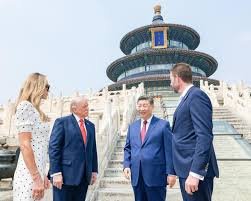
The Taiwan issue has once again gained global attention as Donald Trump visits China during his second term with expectations that discussions with Chinese leadership may include Taiwan.
Taiwan, located close to China has long been a point of tension between United States and China. While Beijing considers Taiwan a part of its territory, the United States maintains strong unofficial ties with the island.
The roots of the conflict date back to the end of World War II, when Taiwan was transferred from Japanese control to Chinese nationalists. Following the Chinese Civil War, the communists took control of mainland China, while nationalist forces retreated to Taiwan establishing a separate government.
Since then, China has consistently claimed sovereignty over Taiwan, while Taiwan has maintained its own political and economic system. The United States viewing Taiwan as a strategic partner has supported it diplomatically and militarily over the decades.
Tensions further intensified during the Korean War, when opposing alliances strengthened divisions in the region. Taiwan became an important ally for the US in countering communist influence in Asia.
Today, Taiwan remains a key geopolitical flashpoint with its strategic location, advanced economy and political status making it central to US-China relations.
Trump’s visit is expected to influence ongoing discussions around regional stability, security alliances and the future of Taiwan.
Keywords:
Taiwan issue explained
US China Taiwan tensions
Donald Trump China visit 2026
Taiwan China conflict history
US Taiwan relations
China Taiwan dispute
geopolitics Asia Pacific
Taiwan strategic importance
US China relations 2026
Taiwan sovereignty dispute
Asian Burg | World / Geopolitics
Send your feedback via email info@asianburg.com