




There are countless ways to explain why some countries flourish while others remain trapped in cycles of poverty and instability. Geography, culture, education levels and natural resources are often presented as the primary answers. Yet, these explanations tend to feel incomplete. They describe conditions but they do not fully explain outcomes.
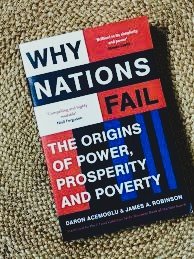
In my view, the more compelling explanation lies in something less visible but far more decisive: the structure of power within a society.
The idea that institutions shape prosperity fundamentally changes how we interpret global inequality. It shifts the conversation away from what a country lacks and toward how it is organised. Who makes decisions, who benefits from those decisions and whether ordinary people have the opportunity to participate in economic life become far more important questions than climate or resource availability.
This perspective challenges a deeply ingrained habit of blaming outcomes on circumstances. It is easy to assume that poorer nations simply have fewer advantages. However, when countries with similar conditions produce vastly different results, that assumption becomes difficult to defend. What stands out instead is how differently their systems function.
The distinction between inclusive and extractive systems offers a useful framework. Inclusive structures tend to distribute opportunity more broadly. They allow individuals to build businesses, protect their work and compete without excessive interference. They also create space for participation, where citizens can influence decisions and hold authority accountable.
Extractive systems operate on a different logic. Power is concentrated and economic opportunities often follow that concentration. In such environments, success is less about innovation or effort and more about access to influence. Over time, this reduces incentives for investment and creativity, slowing progress in ways that are not always immediately visible.
What I find particularly striking is the idea that underdevelopment is not always accidental. In some cases, it can be sustained by those who benefit from the status quo. Economic growth, while beneficial for society at large, can disrupt existing power structures. A more prosperous population may demand greater accountability, competition and transparency changes that not all leaders or elites are willing to embrace.
This creates a paradox. The very reforms that could strengthen a country economically might weaken the control of those in charge. As a result, resistance to progress can emerge not from ignorance but from calculated self-interest.
Innovation presents a similar dilemma. While technological and economic change can drive growth, it can also displace established systems. Those who benefit from existing arrangements may view innovation as a threat rather than an opportunity. This tension can slow adoption, limiting a country’s ability to evolve in a competitive global environment.
Another commonly misunderstood factor is the role of natural resources. It is often assumed that resource-rich countries are destined for prosperity. In reality, resources can reinforce inequality if they are controlled by a narrow segment of society. Wealth generated from these assets does not automatically translate into widespread development. Instead, it can deepen existing imbalances if not managed inclusively.
What becomes clear is that the question is not simply whether a country possesses wealth but how that wealth is governed. The same principle applies to public spending, market access and even education. Distribution and control matter as much as availability.
Perhaps the most concerning aspect of unequal systems is their ability to sustain themselves. Power can reinforce economic advantage and economic advantage can reinforce power. This creates a cycle that is difficult to break. Without meaningful change, the same structures continue to produce the same outcomes.
At the same time, there is an alternative path. Systems that gradually expand participation and accountability can create positive feedback loops. As more people gain access to opportunities, economic activity increases. This, in turn, strengthens demands for better governance leading to further improvements. Progress, in such cases, becomes self-reinforcing.
What makes this discussion particularly relevant is that it applies universally. No country is entirely immune to the challenges of concentrated power or unequal opportunity. The balance between inclusion and control exists on a spectrum and even well-developed systems must continuously adapt to maintain fairness and efficiency.
The most valuable takeaway, in my opinion is the shift in perspective this framework encourages. Instead of asking why people are poor, we begin to ask how systems are structured. Instead of focusing only on outcomes, we examine the processes that produce them.
This leads to more meaningful questions. Who has access to opportunity? Are markets genuinely competitive? Can institutions function independently? Is there accountability in governance? And perhaps most importantly, who benefits from keeping things exactly as they are?
These questions are not always comfortable but they are necessary. They move the conversation beyond surface-level explanations and into the deeper mechanics of how societies function.
Ultimately, prosperity is not just about resources or policies. It is about whether a system allows individuals to participate, compete and succeed without undue barriers. When power is distributed in a way that supports these conditions, growth becomes more sustainable and inclusive.
When it is not, progress becomes uneven and in some cases, deliberately constrained.
That is why the discussion around institutions and power remains so important. It reminds us that economic success is not predetermined. It is shaped by choices choices about governance, accountability and who gets to participate in shaping the future.
And those choices, more than anything else, determine whether prosperity is shared broadly or concentrated in the hands of a few.
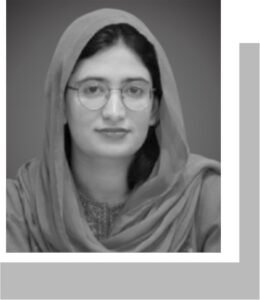
Saira Iftikhar
About the Author:
Ms Saira Iftikhar is a seasoned media consultant and dairy development expert with advanced qualifications in management. She has served as a Member of the Provincial Assembly of Punjab and contributes business columns to leading newspapers. She belongs to a distinguished political family with a strong legacy of public service.
Keywords: why nations fail summary, inclusive vs extractive institutions, political economy analysis, power and development, economic inequality causes, governance and growth, institutional economics explained, global development issues, prosperity vs poverty nations, public policy analysis