
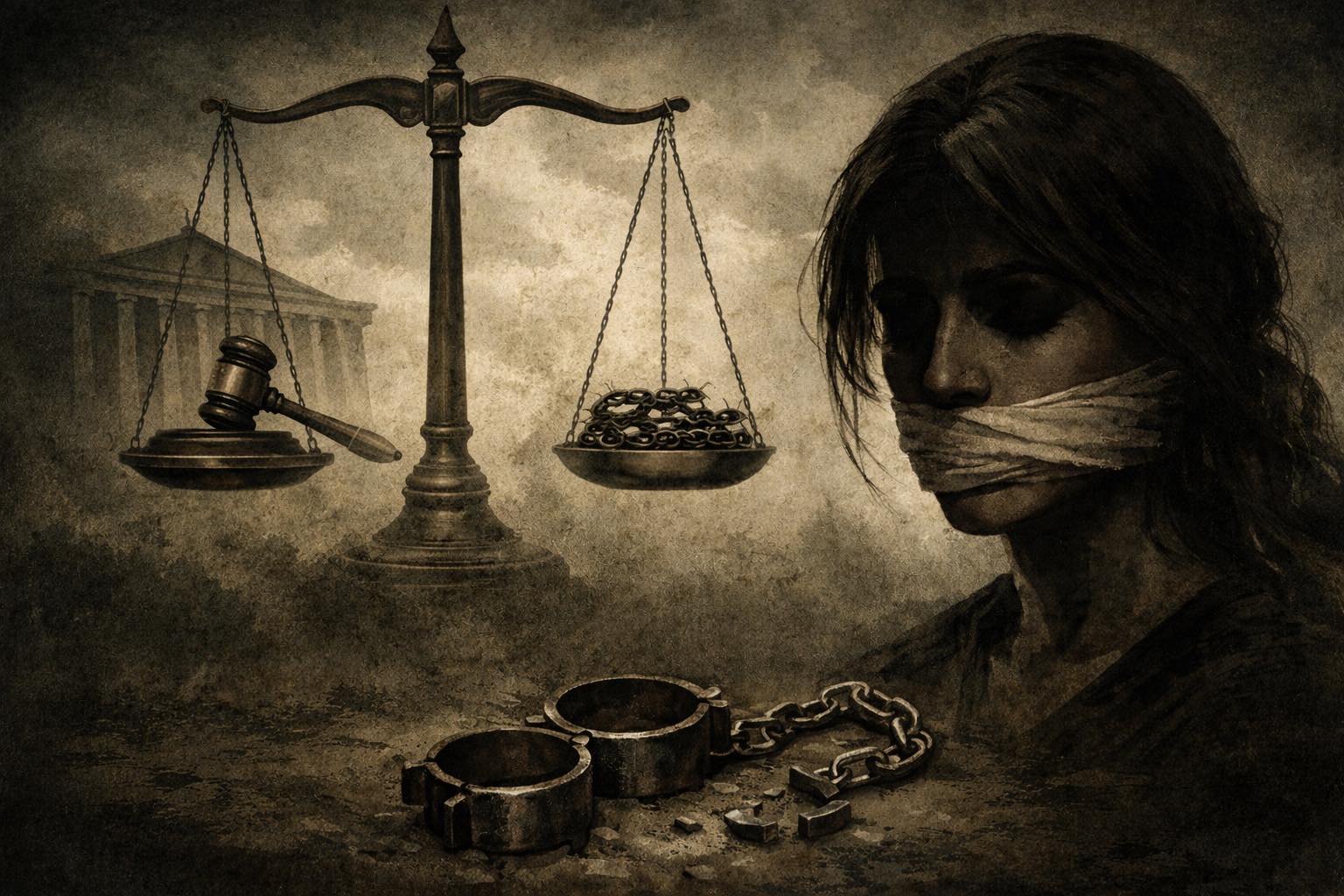
In Pakistan, many of the gravest injustices inflicted upon women are not merely moral failures but explicit violations of constitutional, criminal and family laws. Practices such as swara, vani, watta satta, marriage with the Quran, honour killings, karo kari, child marriage and denial of inheritance persist not because of legal gaps, but because of weak and hesitant enforcement. The problem is not the absence of law; it is the absence of the law’s authority in everyday social life.
Swara (also known as Vani) is one of the most brutal manifestations of customary injustice, where a woman is handed over to an aggrieved family as “compensation” for a crime committed by a male relative. Under Pakistani law, such an arrangement has no legal validity and constitutes a criminal offence. Superior courts have repeatedly declared this practice a violation of human dignity, free consent and fundamental rights. Yet in many rural and tribal areas, jirgas and informal councils continue to exercise greater power than the state itself.
Watta Satta (exchange marriage) is often presented as a consensual family arrangement but in reality it places women in a system of mutual retaliation. Any abuse, dispute, or divorce on one side is mirrored on the other, trapping women in violent and coercive marriages. While exchange marriage itself is not illegal, the moment coercion, violence, or forced consent is involved, it becomes a criminal matter. In practice, however, the state intervenes only after irreversible harm has occurred.
Marriage with the Quran (Haq Bakshish) is another practice falsely cloaked in religious symbolism. It has no basis in Islamic jurisprudence and no recognition in Pakistani law. Its sole purpose is to prevent women from marrying and to retain property within the family. Courts have declared it illegal and exploitative yet social secrecy and family pressure shield perpetrators from accountability.
Honour killing is now unequivocally criminalized under Pakistani law, with legal loopholes that once allowed family pardons having been significantly curtailed. “Honour” is no longer a legal defence. Despite this, convictions remain disturbingly low due to weak investigations, hostile witnesses and intense social pressure. The law condemns the crime, but society often continues to protect the criminal.
Karo Kari is a localized and tribal form of honour killing, historically prevalent in parts of Sindh. In this practice, a woman is labelled “kari” on the basis of suspicion or allegation and killed, while the male accused often escapes death or later secures legal and social concessions. Legally, karo kari carries no separate status; it is murder under the law. Yet cultural normalization and informal settlements routinely undermine the criminal justice process.
Child marriage remains illegal in Pakistan but weak birth registration systems, negligent nikah registrars and administrative silence render the law ineffective. Similarly, denial of inheritance despite being prohibited by constitutional, legal, and religious provisions, continues through emotional coercion and family pressure, rarely entering official legal records.
What unites all these practices is not legal ambiguity but reluctance. Informal justice systems, local power structures and cultural pressure have relegated formal law to a secondary position. Police, administrators and relevant authorities frequently dismiss such cases as “family” or “traditional” matters, allowing illegality to masquerade as custom.
True reform will not come from drafting new laws but from making existing laws unavoidable. The state must reclaim authority from jirgas, informal councils and parallel power structures by ensuring certainty of punishment rather than discretionary enforcement. Officers who ignore forced marriages, nikah registrars who solemnize illegal unions and administrators who look away in the name of tradition should be treated not as bystanders but as facilitators of crime. Customary oppression survives because it is swift, certain, and ruthless. Law fails because it is delayed, negotiable and hesitant. The day justice becomes routine rather than optional, the coercive power of tradition will begin to collapse. Until then, these practices will remain illegal in statute books but normal in Pakistani society.
⸻
(The views expressed in this article are those of the author and do not necessarily reflect the editorial policy of Asian Burg)
By Abi Hadi