



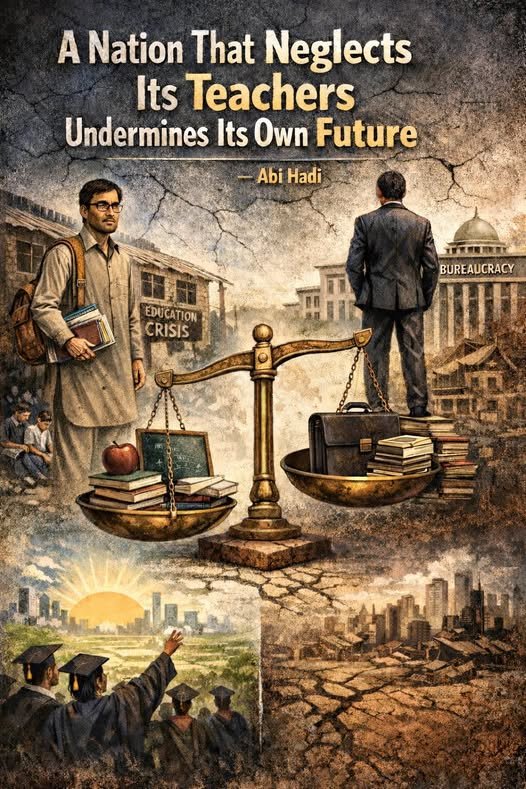
The role of teachers in national development is universally acknowledged yet the manner in which states operationalise this recognition varies significantly. In Pakistan, education is routinely described as a national priority but the institutional position of teachers does not consistently reflect this claim. This mismatch warrants a measured and evidence-based examination rather than emotive critique.
Teachers in Pakistan are recruited through competitive process and generally possess solid academic backgrounds. They are entrusted with delivering curricula, maintaining standards and preparing students for higher education and civic life. At the same time, their compensation structures, career progression and participation in policy formulation remain limited when compared with other public services, particularly the civil bureaucracy. This disparity has contributed to a perception gap regarding professional status and influence.
International experience provides useful context. Countries such as Finland, South Korea and Singapore have deliberately aligned teachers’ status with national development objectives. In these systems, teachers are offered competitive remuneration, structured career pathways, continuous professional development and defined roles in curriculum and education policy. Importantly, these measures were introduced gradually and in parallel with accountability mechanisms, ensuring performance standards alongside professional autonomy.
Pakistan’s governance structure, by contrast, places greater emphasis on administrative coordination and regulatory oversight. Bureaucracy therefore occupies a central position in decision-making and resource allocation. This is not without rationale, as complex state functions require administrative continuity and control. However, when educational professionals remain largely outside strategic deliberations, the effectiveness of education reform can be constrained.
Expectations placed on teachers are substantial: they are required to adapt to frequent policy changes, address learning gaps and inculcate civic values. These responsibilities are difficult to discharge optimally without institutional support and professional standing. Research and comparative evidence suggest that education systems tend to perform in line with the status and capacity of their teaching workforce.
A balanced approach is therefore necessary. Elevating the role of teachers does not imply diminishing the importance of bureaucracy rather it requires better alignment between administrative authority and intellectual leadership. Practical steps could include improved pay progression, targeted non-salary benefits, structured involvement of educators in policy design and clearer professional advancement tracks linked to performance.
Sustainable nation-building depends on both effective administration and strong human capital development. Recalibrating the position of teachers within the public sector is not a symbolic exercise but a strategic adjustment that can strengthen educational outcomes while reinforcing long-term social and economic stability.