



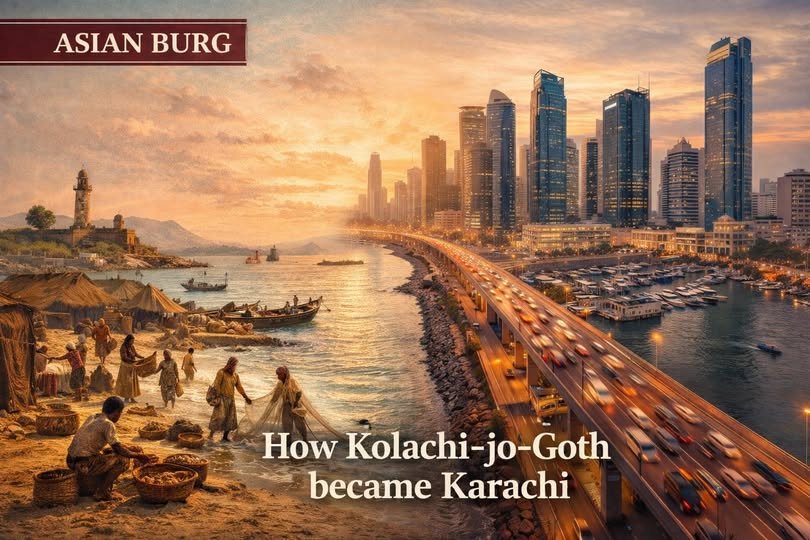
The name Karachi carries flavour of folklore, geography and early coastal settlement history. Long before it became Pakistan’s largest metropolis and financial hub, Karachi was a modest fishing settlement on the Arabian Sea and its name is widely believed to have emerged from that earlier identity.
The most accepted historical account traces the name to “Kolachi” which then used to be a small Sindhi fishing village that existed in the area during the 17th and early 18th centuries. According to regional tradition, the settlement was called Kolachi-jo-Goth (meaning the village of Kolachi) named after a fisherwoman who is often referred to in folklore as Mai Kolachi. Mai Kolachi is said to have founded the community. Over time, as trade routes expanded and the settlement appeared on maritime charts, Kolachi gradually transformed in pronunciation through Persian, Balochi and colonial usage into Karachi.
Another linguistic explanation links the name to local words connected with the coastal environment. Some scholars suggest roots in Sindhi and Balochi expressions related to creeks, brackish water or fishing activity — all central to the area’s geography. However, the Kolachi origin remains the most widely cited in regional historiography.
When British surveyors and traders began mapping the coast in the 18th century, they recorded variants such as Caranjee, Kurrachee and Karachee this spelling shift was typical colonial phonetic transcription. By the mid-19th century, under the British administration, the standardized spelling Karachi was entered into official records.
It is significant to note that Karachi’s name unlike many South Asian cities did not come from rulers, dynasties or imperial titles. It emerged instead from a local settlement identity, shaped by fisherfolk, tides and trade. The transformation from Kolachi-jo-Goth to Karachi mirrors the city’s own journey: from a coastal village to a global port metropolis.
— ASIAN BURG