


Feature story by Asian Burg
—
Chinese New Year is often seen through the lens of fireworks, lanterns and grand festivities yet the real essence of the celebration quietly lives inside homes. Long before the streets light up, families begin preparing symbolic foods and gifts that are rooted in centuries-old cultural beliefs. These rituals are not random traditions rather they are intentional acts meant to welcome health, prosperity, peace and protection into the coming year.
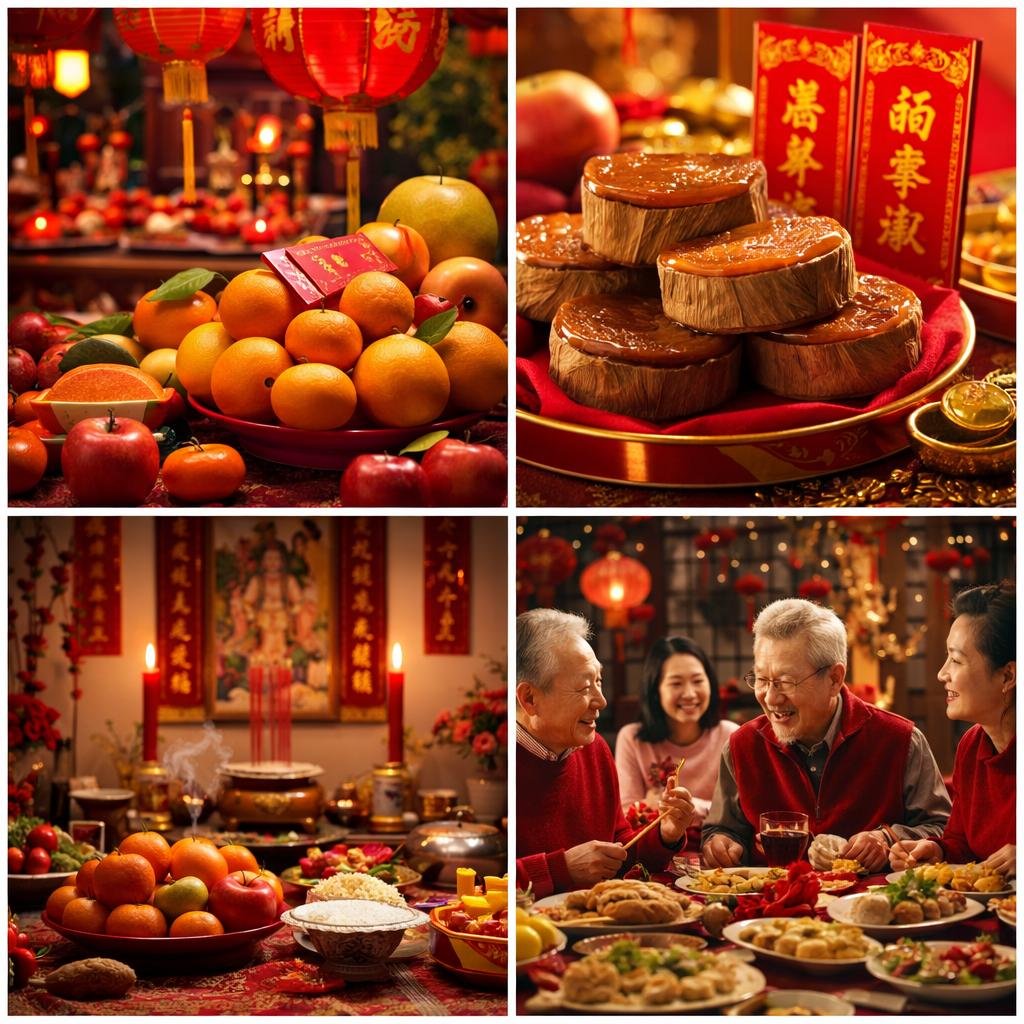
One of the most visible customs is the exchange of fruit. Oranges and tangerines with their golden colour represent wealth and abundance. Apples are offered as a sign of peace and harmony while pomelos symbolize family unity and safety. Even the round shape of many fruits carries meaning — fullness, continuity and a year without gaps or misfortune. The act of giving fruit becomes a quiet wish for completeness in life.
Sweets and sticky rice cakes carry another layer of symbolism. Their soft and cohesive texture represents strong relationships and social bonding. Traditionally, sticky rice cake is also associated with “rising higher” reflecting hopes for professional growth, academic success and upward mobility. Sharing these foods is less about taste and more about collective optimism — a belief that the year ahead can be sweeter and more prosperous.
Offerings such as tea, rice and other staple foods are placed to honor ancestors and protective spirits. This gesture is not merely spiritual it also reflects a cultural respect for lineage and continuity. Many families believe that acknowledging the past stabilizes the future, allowing smoother transitions between life’s cycles. It is a reminder that progress and gratitude often walk together.
Equally important is the arrangement of these offerings. Clean spaces, orderly presentation and the prominent use of red — a color linked with vitality, luck and protection — are considered essential. The environment itself becomes symbolic, suggesting that clarity and intention invite positive energy. Each placement quietly reflects aspirations related to health, wealth, relationships and emotional balance.
In today’s fast-paced world, these rituals also serve a psychological purpose. They create a moment of pause — a structured reflection on the past year and a mindful preparation for the next. Even for those who do not follow astrology or spiritual symbolism, the practices foster togetherness, gratitude and renewal. Families gather, share meals and reconnect, turning tradition into a bridge between generations.
Ultimately, Chinese New Year rituals reveal that celebration is not only about spectacle but about meaning. Behind every fruit basket, sweet dish and red decoration lies a collective human desire — to begin again with hope, unity and intention. In that sense, the festival is less about changing the calendar and more about resetting the spirit.