


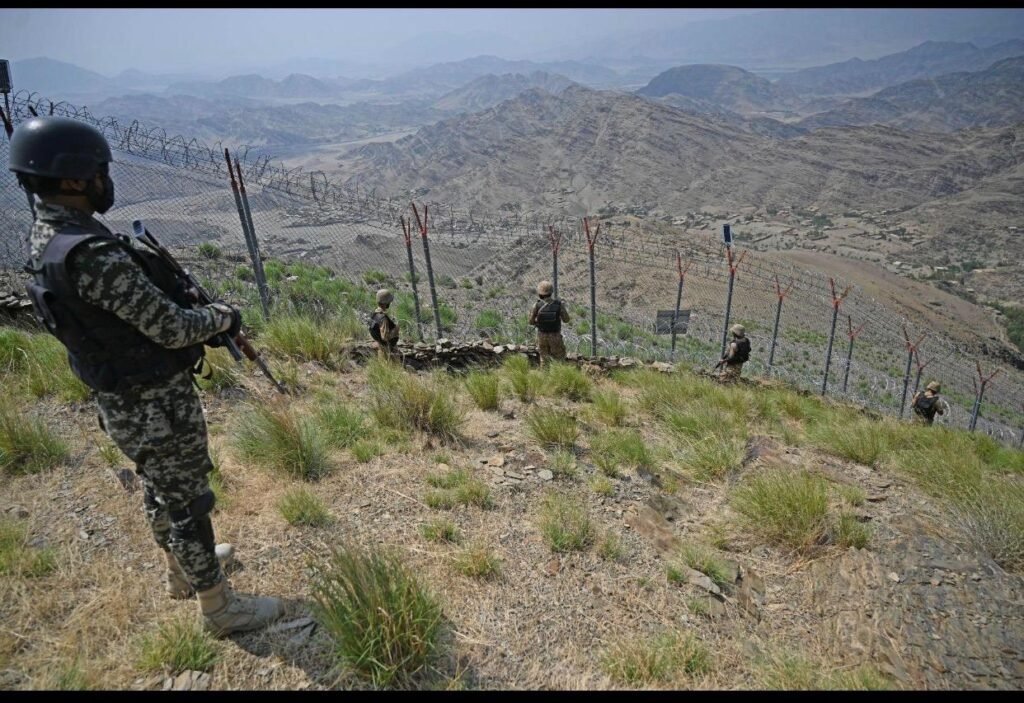
Pakistan and Afghanistan once again find themselves trapped in a cycle that neither side publicly desires yet repeatedly reproduces. The recent cross-border clashes are not merely isolated security incidents rather they reflect a deeper structural tension rooted in geography, governance gaps, militant sanctuaries and competing security narratives that have remained unresolved for decades.
For Pakistan, the resurgence of militant attacks originating from across the border has become an increasingly urgent national security concern. Islamabad argues that armed groups targeting Pakistani civilians and security forces are operating from Afghan territory, exploiting porous mountainous regions and weak enforcement capacity. Each major attack inside Pakistan intensifies domestic pressure on the state to respond decisively making restraint politically difficult. The strikes and retaliatory actions therefore emerge less as choices and more as responses shaped by internal security imperatives.
The problem is compounded by history. The Pakistan-Afghanistan border has never functioned as a conventional boundary. Tribal linkages, economic interdependence and decades of conflict have created a fluid security environment where militant networks, refugees and informal trade move more easily than state authority itself. The return of the Afghan Taliban to power in 2021 altered expectations but did not eliminate militant threats. Instead, it created a paradox in which ideological proximity did not translate into security cooperation.
What makes the current situation particularly concerning is the gradual normalization of escalation. Limited strikes, accusations and retaliatory rhetoric risk establishing a dangerous pattern where military signalling replaces diplomatic engagement. Such dynamics can quickly spiral beyond intended limits especially in regions already burdened by economic fragility and humanitarian stress.
Neither country benefits from prolonged instability. Pakistan faces economic strain and internal security pressures while Afghanistan remains internationally isolated and heavily dependent on regional goodwill for economic survival. Continued confrontation diverts attention from shared priorities such as border trade, refugee management, counter-narcotics efforts and regional connectivity projects that could benefit both societies.
A sustainable path forward requires institutionalized security dialogue rather than episodic crisis management. Intelligence coordination mechanisms, joint border monitoring and verifiable commitments against militant safe havens are essential if mutual distrust is to be reduced. Equally important is regional diplomacy involving neighboring states and international stakeholders who have a vested interest in preventing another cycle of instability in South Asia.
Ultimately, Pakistan and Afghanistan are not optional neighbors but they are permanent geographic realities bound by history, culture and economic necessity. Military responses may offer temporary tactical relief but long-term stability will depend on political courage and sustained engagement. The ongoing clashes should therefore serve not as another chapter in a recurring conflict but as a reminder that security in this region cannot be achieved through deterrence alone. It must be built through cooperation, accountability and a shared recognition that peace across the border is inseparable from peace within it.
_Asian Burg News Desk_