




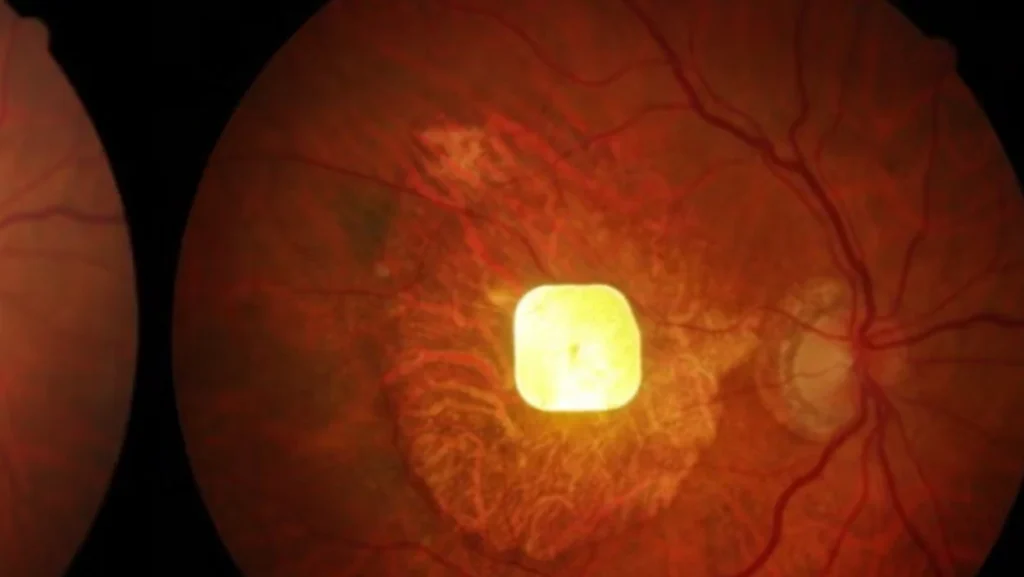
A new advancement in medical technology is bringing renewed hope to people affected by certain forms of blindness. A retina implant developed by Science Corp is set to become available in Europe marking a significant step forward in the field of vision restoration and neurotechnology. The device, known as the Prima implant is designed to restore partial sight for individuals with age-related retinal conditions.
The implant represents one of the first widely accessible devices from a US-based brain technology company signaling progress toward more advanced neural interface solutions. Positioned at the back of the eye, the chip works in combination with specialized glasses to help transmit visual signals, allowing users to regain a degree of functional vision.
This development highlights the growing intersection between neuroscience, biomedical engineering and digital technology. By bypassing damaged retinal cells and directly stimulating remaining visual pathways, the implant enables the brain to process visual information in a new way. While it does not fully restore natural vision, it can significantly improve a patient’s ability to perceive shapes, light, and movement.
The introduction of the Prima implant reflects years of research into artificial vision systems and neurostimulation. Scientists and engineers have been working to develop solutions that can compensate for degenerative eye conditions, particularly age-related macular degeneration, which is one of the leading causes of vision loss worldwide.
The availability of this device in Europe marks an important milestone, not only for patients but also for the broader neurotechnology industry. It demonstrates that implantable devices designed to interact with the nervous system are moving closer to real-world clinical use rather than remaining confined to experimental settings.
Beyond vision restoration, the technology behind retina implants has broader implications for the future of brain-computer interfaces. Companies working in this space aim to develop devices that can treat neurological conditions, restore lost sensory functions and potentially enhance human capabilities. The Prima implant is an early example of how these ambitions are beginning to translate into practical medical applications.
Despite its promise, the technology remains in its early stages. The level of vision restored is limited, and ongoing research is needed to improve resolution, usability and long-term outcomes. As with any implantable medical device, safety, durability and patient adaptation remain key considerations.
The launch of the retina chip underscores a larger trend in modern healthcare, where innovation is increasingly focused on restoring function rather than simply managing symptoms. Advances in neurotechnology are opening new pathways for treating conditions that were once considered irreversible.
As research continues and technology evolves, devices like the Prima implant may pave the way for more advanced solutions capable of delivering higher-quality vision and broader neurological benefits. The progress seen today suggests that the future of vision restoration and brain-interface technology is moving steadily from possibility to reality.
Keywords:
retina implant technology, vision restoration chip, Prima implant Science Corp, blindness treatment innovation, age-related macular degeneration treatment, brain implant future, artificial vision technology, neurotech devices, restoring eyesight innovation, eye chip Europe launch
Asian Burg \ Health / Technology
Send your feedback via email info@asianburg.com