



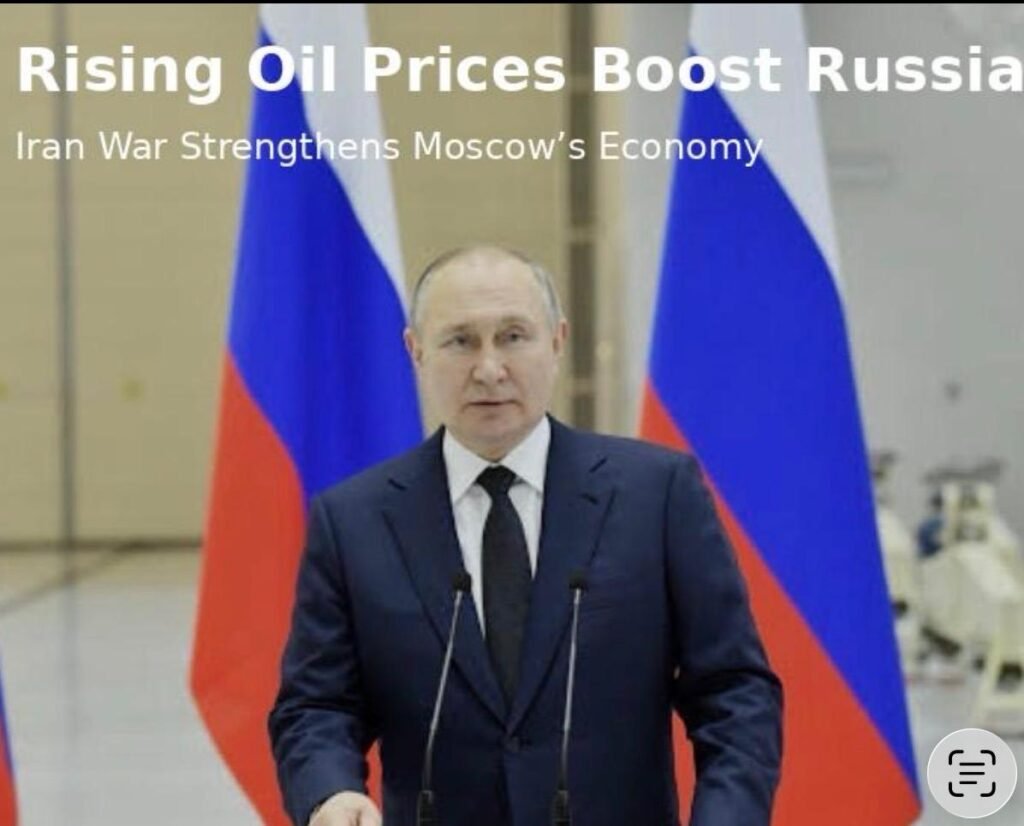
The Iran conflict has given Russia’s struggling economy a significant boost, with rising oil prices increasing state revenues and helping sustain its war effort in Ukraine. Higher global energy prices have allowed Russia to sell its crude at near full market value, marking a sharp turnaround after months of heavy discounts due to sanctions.
Before the conflict, Russia faced mounting economic pressure, with falling exports and shrinking revenues. However, the surge in oil prices has eased budget concerns, delayed planned spending cuts and brought in billions in additional monthly income. Energy revenues remain critical as they fund a large portion of government spending, including military operations.
Beyond oil, Russia is also benefiting from disruptions in global supply chains, particularly in natural gas and fertilizers. As a major exporter, Russia is gaining new buyers and strengthening trade relationships, especially as uncertainty grows around key transit routes like the Strait of Hormuz. These shifts could create long-term dependencies that extend beyond the current conflict.
At the same time, the crisis may reshape global energy dynamics. Countries like India and China could increase reliance on Russian supplies while also accelerating investments in alternative energy. Despite these short-term gains, Russia still faces deeper economic challenges, including inflation, rising costs and slow growth, meaning the current windfall may provide relief but not a lasting solution.
_Asian Burg Global Desk_