


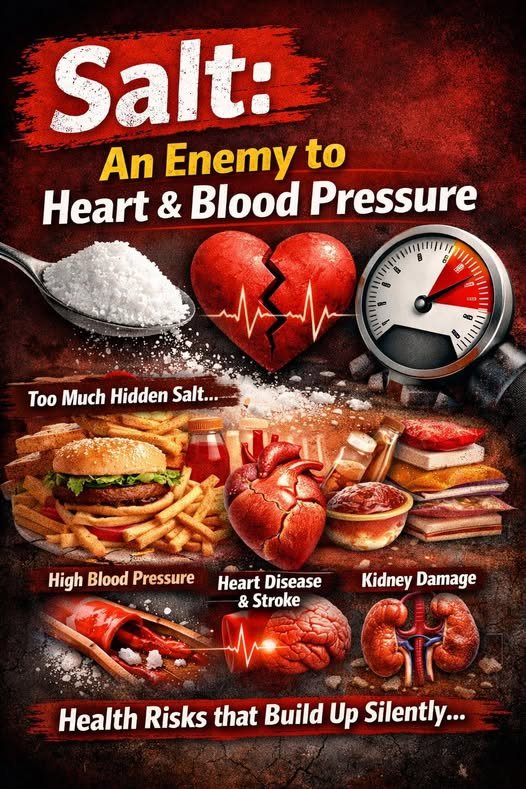
Salt is essential to human life yet in modern diets it has quietly shifted from necessity to excess. The real danger is not the salt we sprinkle at the table but the hidden sodium in processed foods, restaurant meals, sauces, breads, bakery items, instant noodles, chips and frozen products that accumulates unnoticed throughout the day. The problem is less about home kitchens and more about the food environment where taste and shelf-life are often prioritised over health.
Widely accepted global health guidelines including those referenced by the WHO, recommend no more than 5 grams of salt per day roughly one level teaspoon. Yet dietary surveys across many countries show average consumption ranges between 9–12 grams daily nearly double the safe limit. This silent surplus does not cause immediate discomfort rather it works gradually by raising blood pressure and increasing the risk of heart disease, stroke and kidney strain without obvious early symptoms.
What makes salt particularly dangerous is the slow and invisible nature of its damage. Medical research consistently links high-sodium diets with cardiovascular complications, fluid retention, gastric issues and even long-term bone density loss. A person may feel perfectly normal while internal pressure quietly builds over years turning a daily habit into a chronic condition.
Equally concerning is that children and teenagers now consume adult-level sodium, shaping lifelong taste preferences and future health risks. While sugar and fats dominate public debate, salt rarely receives equal caution despite its constant presence.
The solution is not elimination but mindful moderation. Taste food before adding extra salt, limit packaged snacks, read sodium labels, use herbs, lemon and spices for flavour. Even small consistent reduction retrain the palate within weeks and significantly lower long-term risk.