


Ali Ahmad Leghari
The recent revelation that more than 70 percent of tested baby foods in the United States fall into the category of ultra-processed foods (UPFs) is not merely a foreign statistic rather it is a warning signal echoing across the globe. A February 2026 study published in Nutrients examined hundreds of infant food products and found that additives, flavor enhancers, thickeners and emulsifiers often appeared not as secondary elements but as primary ingredients. In simple terms, many baby foods are designed more for shelf life and taste engineering than for nourishment.
The deeper concern extends beyond calories. Modern research increasingly links early exposure to cosmetic additives with long-term metabolic and behavioral consequences. Artificial flavor profiles condition infants to prefer sweetness over natural tastes, subtly programming lifelong dietary preferences. Disruption of the developing gut microbiome, low-grade inflammation, increased risks of obesity and Type-2 diabetes later in life are no longer speculative fears but growing scientific conversations. The danger is not visible in infancy rather it manifests gradually years later.
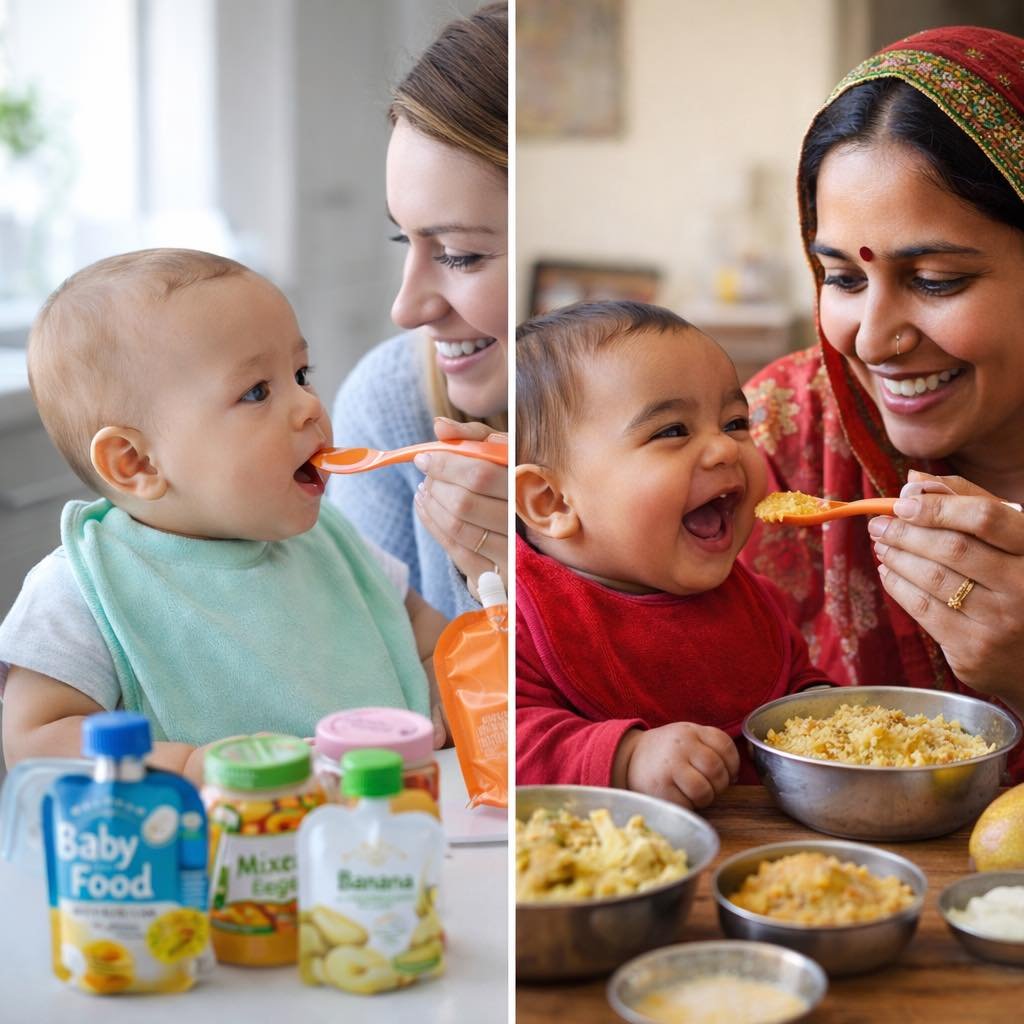
When this global trend is viewed through the India and Pakistan, the implications become even more profound. South Asian societies historically prided themselves on ghar ka khana — home-prepared meals rooted in grains, lentils, fruits and natural fats. Traditional weaning foods such as khichdi, mashed bananas, suji porridge, lentil soups and seasonal fruits were not only economical but nutritionally dense. However, rapid urbanisation, nuclear family structures and time-pressured lifestyles have accelerated a cultural shift toward packaged cereals and ready-to-serve purees.
Ironically, in regions already grappling with food adulteration fears, many parents trust factory-sealed products more than fresh local produce. Marketing strategies reinforce this perception by highlighting fortification claims, iron and vitamins while diverting attention from long lists of stabilizers and emulsifiers necessary for extended shelf life in warm climates. The result is a double burden: rising childhood obesity alongside persistent micronutrient deficiencies and stunting. A child may appear healthy in weight yet remain nutritionally deprived at the cellular level.
This moment calls for greater transparency rather than panic. Ultra-processed foods are not inherently evil but their unchecked dominance in infant diets is concerning. The solution does not lie in total rejection of commercial products but in restoring balance — reading ingredient labels critically, reducing sugar exposure and reviving minimally processed home foods wherever possible.
In societies where food is intertwined with affection and identity, outsourcing a child’s earliest meals entirely to industrial supply chains carries consequences that extend beyond nutrition. The most premium nourishment for an infant is seldom the most expensive imported jar but it is often the simplest bowl prepared with awareness, awareness being the true missing ingredient in the modern baby-food economy.
The future of public health may very well begin with what is placed on a child’s first spoon.
About the Writer*
_Ali Ahmad Leghari is a professional Food Technologist with practical experience in food safety, nutrition awareness and dietary research. He advocates balanced, evidence-based food choices while also valuing traditional dietary wisdom for long-term community health._