




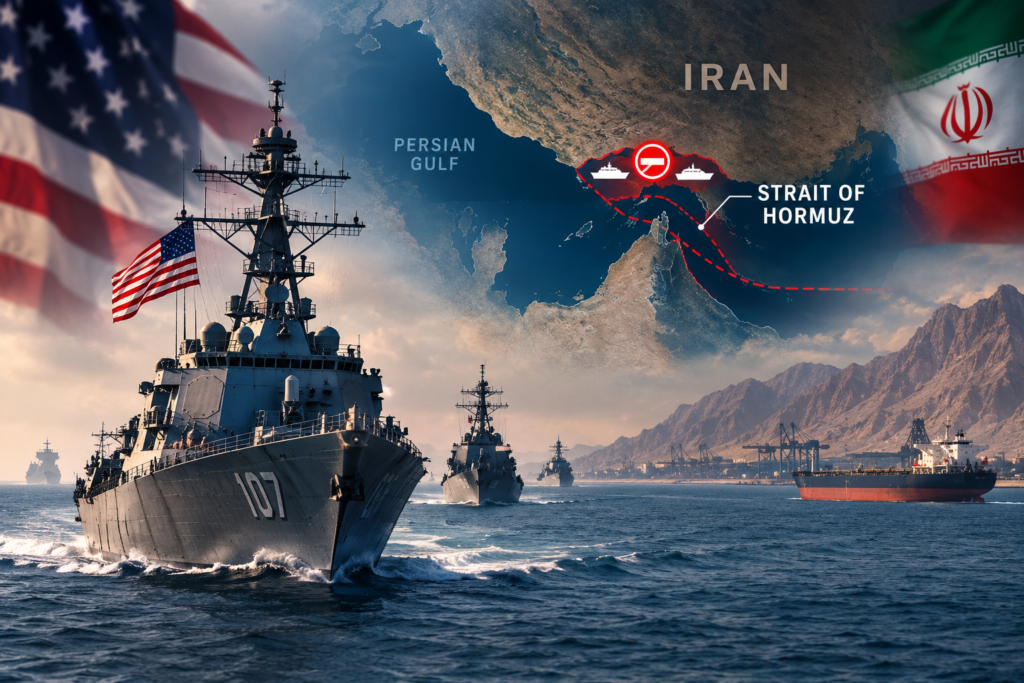
Six weeks into the war with Iran, US President Donald Trump has assigned the United States Navy some of its most complex missions yet, including enforcing a naval blockade on Iranian ports and clearing mines from the strategic Strait of Hormuz.
The blockade applies to all Iranian ports, both within and beyond the strait and is aimed at cutting off Tehran’s revenue from energy exports. The move comes as Iran continues to exert control over the vital shipping lane, a key route for global oil and gas supplies.
Trump also signalled a broader enforcement strategy directing the Navy to intercept vessels in international waters that pay transit fees to Iran warning that such ships would not be allowed safe passage.
The latest orders mark a significant shift in the conflict, which had largely been fought through air operations until now. Naval forces are increasingly being deployed for high-risk missions including blockade enforcement and mine clearing operations.
US Central Command confirmed that guided missile destroyers have entered the Strait of Hormuz to begin preparing for minesweeping operations, a critical step in ensuring the safety of international shipping.
A naval blockade is considered a form of economic warfare, designed to restrict an adversary’s trade and financial flows. It involves intercepting or restricting vessels to prevent exports and imports that could support a country’s war effort.
Under international law, blockades must meet several conditions including being formally declared, effectively enforced and applied impartially to all vessels. They must not target civilian populations directly or block access to neutral ports.
Analysts warn that enforcing a blockade against Iran presents significant risks. Tehran retains the capability to respond using sea mines, missile equipped boats, drones and land based missile systems.
Military experts say such an operation would require strong maritime superiority including multiple aircraft carrier groups and surface ships to secure the entrance to the Persian Gulf.
There are also concerns that Iran could interpret the blockade as an escalation of the conflict, potentially increasing the risk of broader military confrontation in the region.
The Strait of Hormuz remains one of the world’s most critical energy chokepoints with a significant share of global oil shipments passing through it daily.
Any disruption to shipping in the region could intensify global energy market volatility raising concerns about supply stability and price spikes.
Keywords: US Iran war 2026, Strait of Hormuz crisis, US naval blockade Iran, global oil supply disruption, Trump Iran policy, CENTCOM operations, Persian Gulf tensions, maritime warfare, energy security crisis, naval mines clearance, Middle East conflict update
Asian Burg | Global Desk
Send your feedback via email info@asianburg.com