



Recent statements by former US President Donald Trump have renewed global attention on the expansion of the Abraham Accords, as he urged several Muslim-majority countries to collectively join the agreement and normalize relations with Israel.
The proposal includes countries such as Saudi Arabia, Pakistan, Turkey, Qatar, Egypt and Jordan, signaling a potential shift in regional diplomacy.
What Are the Abraham Accords?
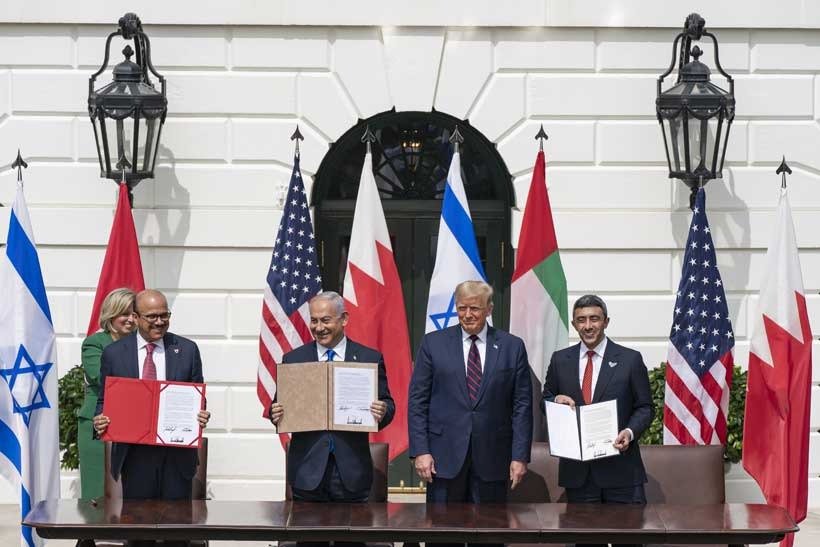
The Abraham Accords were signed in September 2020, marking a major diplomatic breakthrough in the Middle East.
Initially signed by United Arab Emirates and Bahrain with Israel
Later joined by Sudan and Morocco
Aimed at normalizing diplomatic, economic and security relations with Israel
The agreements shifted traditional regional alignments prioritizing economic cooperation and shared strategic interests.
Economic and Strategic Impact
Following the accords, several developments highlighted their impact:
Increased trade and investment flows between Israel and Gulf countries
Establishment of joint business ventures and investment funds
Expansion of security and defense cooperation
For example:
Israeli defence exports reached $11.3 billion in 2021
Around 7% of arms exports went to UAE and Bahrain
Investment partnerships emerged in energy, technology and water management sectors
Companies like Mubadala Energy invested heavily in Israeli firms reflecting growing economic integration.
Technology and Regional Cooperation
One of the core drivers behind the accords is technological collaboration.
Israel offers advanced solutions in agriculture, water management and cybersecurity
Gulf countries seek diversification beyond oil economies
Shared interests have accelerated cooperation in innovation sectors
This alignment reflects a shift from purely political relations to geo-economic partnerships.
Political and Regional Implications
Trump’s call for broader participation raises complex geopolitical questions:
Countries like Pakistan have historically linked normalization with the Palestinian issue
Public opinion in many Muslim countries remains sensitive to relations with Israel
Expanding the accords could reshape Middle Eastern alliances and power dynamics
The move may also influence ongoing conflicts and diplomatic balances across the region.
Conclusion
The Abraham Accords represent a significant transformation in Middle Eastern diplomacy, combining economic opportunity with strategic cooperation.
However, expanding the agreement to include more countries especially those with strong political positions on Palestine remains a challenging and sensitive process.
Focus Keyword:
Keywords:
Abraham Accords countries list
Trump Israel normalization push
Pakistan Israel relations debate
Middle East diplomacy 2026
Israel UAE relations economy
Arab countries Israel ties
geopolitics Abraham Accords
Muslim countries normalization Israel
defense trade Israel Gulf
Middle East strategic alliances
Asian Burg | International / Politics
Send your feedback via email info@asianburg.com