



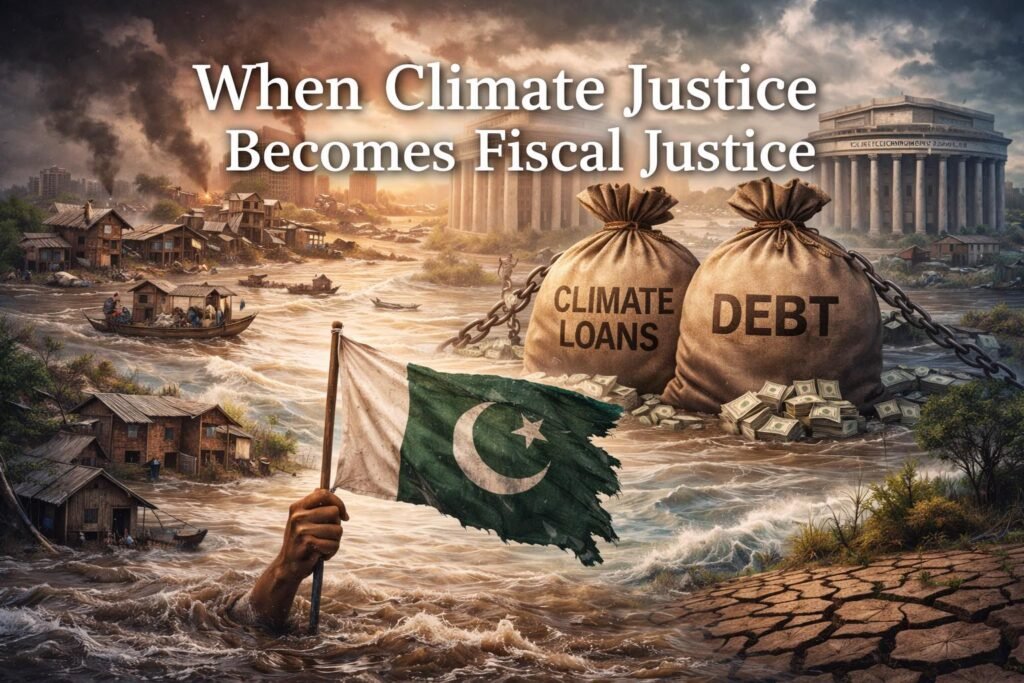
Pakistan’s climate story is usually told in moral terms—low emissions, high exposure. But there’s another side to it: the fiscal side. Our national accounts show we are paying twice for climate change. First, we pay through direct losses from extreme weather disasters. Then we pay again through the interest on loans we take to rebuild. This is not just environmental injustice; it is fiscal injustice.
Low Emissions, High Exposure
Pakistan produces only about 1% of global greenhouse gas emissions. Yet we are exceptionally vulnerable to climate shocks. In 2022’s catastrophic floods, Pakistan was among the worst-hit countries, with roughly $30 billion in damage. It’s a glaring inequity: those least responsible for global warming often suffer the most from its effects.
The Climate Investment Gap
Now consider the cost of resilience. Estimates by the World Bank and the United Nations suggest Pakistan will need around $348 billion for climate adaptation and development between 2023 and 2030. That is roughly 10% of our GDP over that period—far beyond our means. We cannot fund such an effort domestically without gutting other vital services or piling up unmanageable debt.
Loans in the Name of Aid
After the 2022 floods, an international conference in Geneva pledged over $9 billion for Pakistan’s recovery. But the fine print was sobering: most of that support came as loans from development banks. Pakistan’s finance minister noted that nearly 90% of the pledges were loans, not grants. In short, we must borrow to rebuild what we did not break.
This is where climate justice becomes a fiscal issue. Globally, much of what passes as climate “aid” arrives as debt. Wealthy countries finally met the $100-billion-a-year climate finance target in 2022, according to the OECD—but most of that was loan-based. In effect, vulnerable nations are borrowing money to cope with a crisis they did not cause. Analyses by Oxfam and others show that once loans are stripped out, the true value of support is far lower than advertised. For Pakistan, that is not a technicality; it can mean the difference between building resilience and falling into a debt trap.
Loss and Damage
There has been some movement toward climate compensation. At the COP28 summit, countries established a new Loss and Damage fund to help nations hit by climate disasters. Initial pledges were about $700 million—a drop in the bucket compared to what is needed. The idea is simple: when catastrophe strikes, aid should be provided as grants, not loans. The challenge now is turning that principle into reality, with sufficient funding and fast, transparent disbursement to affected communities.
Toward Climate and Fiscal Justice: Five Priorities
What can Pakistan push for to make climate justice a fiscal reality?
1. Flip the financing mix for adaptation.
Adaptation projects—flood protection, climate-smart agriculture, early-warning systems—save lives but do not generate profit. They should be funded mainly through grants or very low-interest finance, not high-interest loans.
2. Debt-for-climate swaps.
Countries like Seychelles and Belize have swapped debt relief for environmental action. Pakistan should pursue similar debt-for-resilience swaps, where creditors cancel part of our debt in exchange for investments in flood management, reforestation, and resilient infrastructure.
3. Use national systems for climate aid.
Climate finance should flow through Pakistan’s budget with strict transparency. Tagging and auditing climate spending can help trace funds from donor to project, building trust and reducing waste.
4. Adopt a green fiscal rule.
A share of unexpected revenue—such as spectrum auctions or mineral royalties—should be earmarked for a dedicated resilience fund. This demonstrates national commitment without cutting essential services.
5. Press for an adaptation compact.
Development banks have expanded climate financing, but too much still goes to mitigation and comes as standard loans. Pakistan should push for an adaptation-focused facility with more grants, concessional terms, and automatic pauses on debt repayments after disasters.
Talking about climate aid as fiscal justice also clarifies responsibilities. Pakistan must strengthen climate governance—better project targeting, transparent budgeting, and delivery to communities. International partners must ensure climate funding does not deepen debt. If both sides act responsibly, climate finance can help rather than harm.
For Pakistan, the question is not whether the world will help us, but how. Climate damage is already here; the choice is how we finance our response. We can rebuild with grants that preserve financial stability, or with loans that erode it. The consequences will shape our schools, hospitals, and homes for decades.
Right now, we are borrowing to rebuild what we did not break—turning a climate crisis into a debt crisis. Pakistan should make this point clearly on the global stage. True climate justice is fiscal justice: fewer loans for our flood walls and more grants to secure our future.
———————
Saba Asghar Bhutta is a civil servant with a professional interest in public finance, climate policy and governance.