




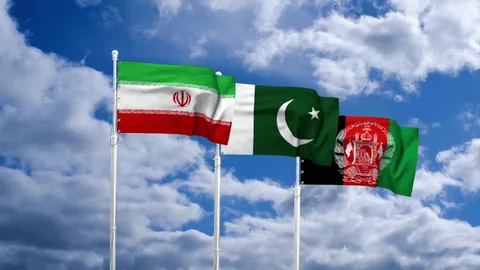
A recent opinion analysis by Ishrat Husain examines the contrasting development trajectories of Pakistan, Iran and Afghanistan three states that formally identify themselves as Islamic republics or emirates.
The analysis explores how effectively these countries have translated Islamic principles such as justice, equity and welfare into governance and economic outcomes.
Afghanistan is described as facing severe socioeconomic decline despite multiple political transitions. Restrictions on women’s education and employment, combined with large-scale migration of skilled professionals have weakened its human capital base. The country continues to struggle with poverty, low literacy and heavy dependence on external aid.
In contrast, Iran is presented as a case of relative resilience. Despite long-standing sanctions and geopolitical tensions, it has made significant investments in education, science and technology. High literacy rates, strong female participation in higher education and advancements in research sectors such as biotechnology and engineering have contributed to a more diversified economy.
Pakistan’s trajectory is characterized as mixed. While it achieved strong economic growth in earlier decades, progress has slowed due to governance challenges, policy inconsistency and structural inequalities. Key issues include rising poverty levels, high population growth and limited investment in education and innovation.
The comparison highlights divergent outcomes: Iran has focused on human development and technological capacity, Afghanistan has experienced regression and Pakistan remains constrained by institutional and policy weaknesses.
The analysis concludes that the legitimacy of any Islamic republic should not be judged by its title alone, but by its ability to deliver justice, reduce inequality and ensure inclusive development for its citizens.
Keywords:
Pakistan Iran Afghanistan comparison
Islamic governance analysis
Iran economic development model
Afghanistan socio economic crisis
Pakistan economic challenges
human development Islamic countries
governance and inequality Pakistan
Middle East South Asia comparison
public policy Islamic states
development gaps
Moanir Abi Hadi
Moanir Abi Hadi is a media analyst and content strategist at Asian Burg, producing insightful work on geopolitics, digital infrastructure and social change. He can be reached at info@asianburg.com