




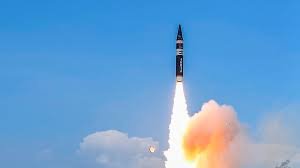
Nearly three decades after the nuclear tests that reshaped South Asia’s strategic balance, the concept of deterrence is undergoing another transformation.
When nuclear weapons were first introduced into the region’s security framework, they were primarily seen as tools to prevent large-scale conventional war. The expectation was clear: the presence of nuclear capability would impose caution, limit escalation and ultimately maintain stability.
That assumption, however, is now being tested by the rapid evolution of modern warfare.
Recent conflicts across the world have demonstrated that military engagement no longer requires mass mobilisation or territorial invasion. Instead, states are increasingly relying on precision-guided weapons, unmanned aerial systems, cyber capabilities and real-time surveillance to achieve strategic objectives without crossing traditional thresholds.
For South Asia, this shift carries serious implications.
The experience of recent India-Pakistan crises shows that limited conflict under the nuclear umbrella is no longer theoretical. Missile exchanges, drone incursions, airspace violations and electronic disruptions have become part of a new pattern of confrontation one that operates below the level of full-scale war but still carries significant escalation risks.
This evolving environment raises a critical question: if nuclear weapons are effective in preventing total war but insufficient in deterring limited conflict, how should deterrence be recalibrated?
One emerging answer lies in strengthening conventional capabilities.
Precision strike systems, in particular are gaining importance as tools of strategic signalling. Unlike traditional military operations, these systems allow for controlled, targeted responses that can impose costs without triggering immediate escalation to the nuclear level. This creates a wider spectrum of options for decision-makers during crises.
At the same time, the growing integration of advanced technologies is complicating deterrence dynamics. Faster decision-making cycles, automated systems and dual-capable platforms are increasing the risk of misinterpretation. In such an environment, even a limited strike can be perceived as the beginning of a larger escalation.
Another challenge is the blurring of lines between conventional and strategic domains. As missile systems become more accurate and destructive, their role begins to overlap with that traditionally associated with nuclear weapons. This overlap introduces ambiguity making it harder for adversaries to interpret intent during a conflict.
The result is a more fragile form of stability one that depends not only on capability but also on communication, restraint and clarity of doctrine.
For policymakers, the task ahead is complex. Maintaining credible nuclear deterrence remains essential, but it must now be complemented by robust conventional options. This requires investment in technology, improved command and control systems and a clearer articulation of response strategies.
Equally important is the need to reduce the risk of miscalculation. Confidence-building measures, transparency in military doctrines and crisis communication mechanisms will play a crucial role in preventing unintended escalation.
The nature of conflict in South Asia is changing, but the stakes remain the same. Deterrence is no longer a static concept; it is an evolving framework that must adapt to technological and strategic realities.
How effectively states respond to this shift will determine whether stability can be preserved in one of the world’s most sensitive nuclear regions.
Keywords:
deterrence South Asia 2026
India Pakistan conflict analysis
precision warfare impact
nuclear deterrence evolution
drone warfare South Asia
missile strategy Pakistan India
modern warfare technology deterrence
strategic stability South Asia
limited war under nuclear shadow
defence policy South Asia
Asian Burg | World / Analysis
Send your feedback via email info@asianburg.com