




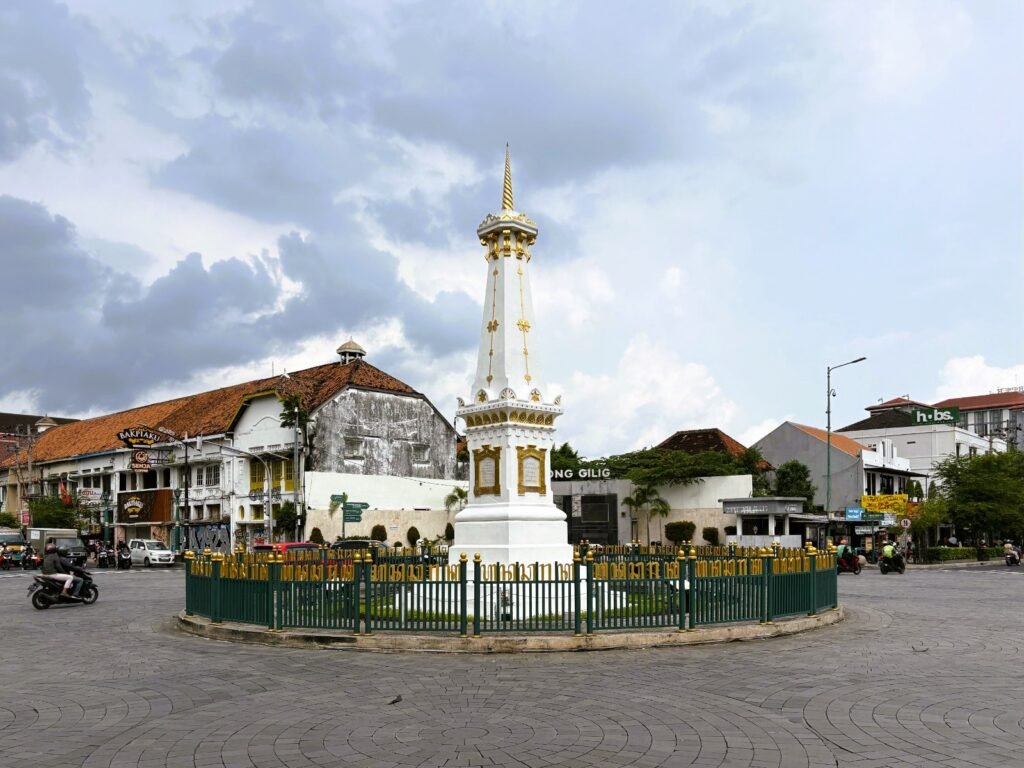
In the middle of Indonesia’s densely populated Java island, Yogyakarta offers a rare encounter with a past that remains part of everyday life.
Known locally as Jogja, the city combines royal traditions, religious monuments, traditional crafts and contemporary urban culture. Its streets can be crowded and noisy, yet within a short distance visitors can encounter centuries-old palaces, temples and landscapes shaped by generations of Javanese history.
Yogyakarta is also unusual within modern Indonesia. While the country is a republic, the city remains closely associated with its sultanate and the continuing role of the Yogyakarta royal family.
The result is a destination where ancient customs and modern life exist side by side.
The City Built Around a Royal Center
The best place to understand Yogyakarta’s identity is the Kraton or Sultan’s Palace.
The palace complex remains associated with Sultan Hamengkubuwono X and his family, while substantial portions are open to visitors. Its architecture, courtyards and decorative details reflect Javanese ideas about the relationship between humans, nature and the wider universe.
The location itself carries symbolic importance. The traditional city was organized along an axis extending between Mount Merapi to the north and the Indian Ocean to the south.
For travelers, the palace provides more than an architectural attraction. Traditional performances, ceremonial spaces and decorative motifs offer an introduction to a culture that has survived enormous political and social changes.
Nearby stands Taman Sari, sometimes called the Water Castle. Built as a royal garden and retreat, the complex contains pools, passageways and distinctive architectural remains combining local traditions with outside influences.
Around the historic center, contemporary Jogja adds another layer. Murals draw on traditional visual culture, workshops produce batik and silver crafts, while cafes and street-food stalls bring the city firmly into the present.
Borobudur and the Buddhist Legacy of Java
A journey outside Yogyakarta reveals an even older chapter of the island’s history.
Borobudur is among Indonesia’s most important archaeological and religious monuments and one of the most recognizable Buddhist structures in Southeast Asia. Built during the period when Buddhist and Hindu kingdoms flourished in Java, the enormous monument reflects a sophisticated combination of architecture, sculpture and religious symbolism.
Its terraces are covered with thousands of carved panels depicting stories and teachings, while bell-shaped stupas crown the upper levels.
For visitors, the monument can easily become a photography destination. Yet its reliefs reward slower attention. Walking around the terraces allows travelers to encounter the stories carved into the stone rather than simply viewing the structure from a distance.
The monument also survived centuries of religious and political change. As Islam became dominant across Java, Borobudur was eventually abandoned and became partially buried and overgrown. Its survival is one reason the site remains such an important part of Indonesia’s cultural landscape.
Today, access to the upper sections is controlled, with visitor numbers limited to help protect the ancient stonework. Visitors who climb the monument may also be required to wear special sandals designed to reduce damage to the historic surfaces.
Prambanan and Java’s Hindu Heritage
Not far away, another monumental complex tells a very different religious story.
Prambanan is Indonesia’s largest Hindu temple compound and is dominated by tall structures dedicated to major Hindu deities, including Shiva, Vishnu and Brahma.
The central temples rise dramatically above the surrounding landscape and are covered with carvings depicting gods, mythical creatures and scenes from Hindu traditions.
More than 200 temples and shrines form part of the broader complex, making Prambanan a vast archaeological landscape rather than a single building.
Borobudur and Prambanan are often presented as contrasting Buddhist and Hindu monuments. But their proximity also reveals something more complicated about Java’s past.
The coexistence of major Hindu and Buddhist centers demonstrates that the religious history of ancient Java cannot easily be reduced to a simple story of competing traditions. Different cultural influences developed alongside one another and left monuments that remain central to Indonesia’s heritage.
A City Where Heritage Remains Alive
Yogyakarta’s appeal extends beyond its most famous monuments.
Batik, one of Java’s best-known textile traditions, remains an important part of local culture. Workshops and small businesses continue to produce patterned fabrics using techniques passed between generations.
Silverwork is another established craft, particularly around areas close to the historic center. Visitors can encounter artisans producing jewelry and decorative objects while navigating narrow streets filled with cafes, galleries and small shops.
Food provides another connection between past and present. Traditional Javanese dishes are served alongside contemporary restaurants and coffee shops, reflecting a city increasingly shaped by students, artists, domestic tourists and international visitors.
That combination gives Jogja an identity different from Indonesia’s larger commercial centers.
Protecting a Fragile Heritage
The popularity of Yogyakarta’s monuments also creates challenges.
Ancient stone structures are vulnerable to weather, heavy visitor traffic and environmental pressures. Borobudur and Prambanan require continuous conservation, while the surrounding communities must balance tourism with the preservation of traditional life.
The history of these sites also raises questions about cultural ownership. Some sculptures and other artifacts were removed from Indonesia during the colonial era and have subsequently been held in foreign collections. Efforts to return cultural objects have made repatriation an increasingly important part of discussions about Indonesia’s heritage.
For visitors, this history adds another dimension to the experience. These monuments are not simply spectacular tourist attractions. They are surviving pieces of a much larger story involving religion, kingdoms, colonialism, conservation and modern Indonesian identity.
Where the Past Still Shapes the Present
Yogyakarta does not preserve history by separating it from modern life.
Instead, the old and new occupy the same streets. Royal traditions continue alongside street art. Ancient religious monuments stand within a modern tourism economy. Traditional crafts are sold beside contemporary coffee shops and centuries-old stories continue to influence the visual culture of the city.
That is what makes Jogja particularly distinctive.
A visit can begin in the royal palace, continue through the remains of Taman Sari and then lead outward to the enormous Buddhist monument of Borobudur and the Hindu temples of Prambanan.
Together, they reveal Java as a place where civilizations, religions and artistic traditions have accumulated rather than simply disappeared.
Yogyakarta’s greatest attraction, ultimately, may be that its history is not confined to museums. It remains visible, practiced and reinvented in the life of the city.
Keywords: Yogyakarta Indonesia, Yogyakarta travel, Jogja, Java cultural capital, Borobudur, Prambanan, Kraton Yogyakarta, Taman Sari, Indonesian heritage, Javanese culture, UNESCO World Heritage
Asian Burg / International