




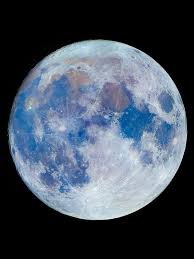
The phrase “once in a blue moon” has long been used to describe something rare. This weekend, however, the expression takes on a literal meaning as the night sky hosts one of its most unusual yet misunderstood events.
A blue moon is not defined by color but by timing. It occurs when two full moons appear within a single calendar month, a result of the natural mismatch between the lunar cycle and the modern calendar. The moon completes its phases in about 29.5 days, slightly shorter than most months allowing an extra full moon to occasionally fit within the same period.
This phenomenon is relatively uncommon appearing roughly once every two to three years. In rarer cases, a year can even contain two blue moons, highlighting the irregular yet predictable nature of lunar cycles.
Despite its name, the moon will not appear blue during this event. It will retain its familiar silvery or golden glow. The term itself dates back centuries, once used to describe something impossible before evolving into its modern astronomical meaning.
There is, however, a scientific basis for a blue-colored moon, though it is extremely rare. Under specific atmospheric conditions such as the presence of fine dust or smoke particles the moon can take on a bluish tint. Historical records show such occurrences following major volcanic eruptions, when particles in the atmosphere altered the way light was scattered.
This year’s event carries an additional distinction. The blue moon will also be a micromoon, meaning it occurs when the moon is at one of the farthest points in its orbit from Earth. Because the moon’s orbit is not perfectly circular, its apparent size changes slightly depending on its distance. At this farthest point, known as apogee, the moon appears marginally smaller, though the difference is barely noticeable to the naked eye.
The upcoming full moon will reach its peak in the early morning hours before sunrise, offering optimal viewing conditions across many parts of the world. While the size difference may not be visible without careful comparison, the event remains significant for astronomers and skywatchers alike.
Beyond its visual appeal, the blue moon serves as a reminder of the precision and complexity of celestial mechanics. The alignment of orbital cycles, calendar systems and observational timing reflects a delicate balance that governs Earth’s relationship with its closest cosmic neighbor.
Events like this also highlight a broader fascination with the night sky. Even in an age of advanced technology, simple phenomena such as a full moon continue to capture attention bridging scientific understanding with human curiosity.
Ultimately, the blue moon is less about spectacle and more about perspective. It illustrates how small variations in natural cycles can create moments that feel rare and extraordinary reinforcing the enduring connection between Earth and the rhythms of the universe.
Keywords:
what is a blue moon
lunar cycle explanation
full moon phenomenon
micromoon meaning
astronomy events 2026
rare celestial events
moon phases science
apogee and perigee moon
night sky observation
space science explained
Asian Burg | Science / Space
Send your feedback via email info@asianburg.com