




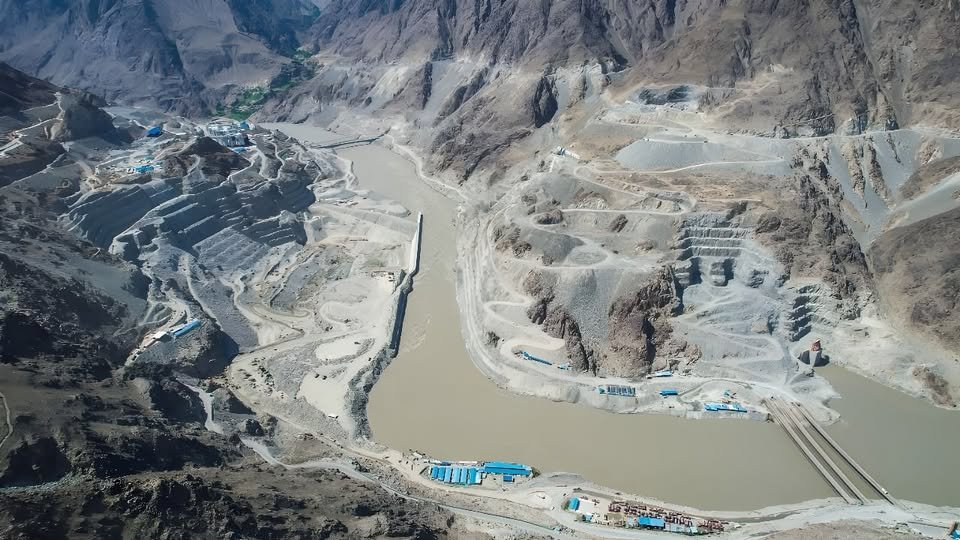
Pakistan is accelerating efforts toward energy independence with the construction of the Diamer-Bhasha Dam, a major hydropower project aimed at reducing reliance on imported fuels and strengthening long-term economic stability.
Located at the junction of Khyber Pakhtunkhwa and Gilgit-Baltistan, the dam is considered a cornerstone of Pakistan’s strategy to achieve energy and water security.
Addressing Energy Dependence
Pakistan has long relied on imported fossil fuels, exposing the economy to:
Global price fluctuations
Balance of payments pressures
Persistent circular debt in the power sector
The shift toward hydropower reflects a broader policy to utilize indigenous resources and reduce external vulnerability.
Key Features of the Project
The Diamer-Bhasha Dam is set to become a landmark engineering project:
Height: 272 meters, making it one of the world’s tallest roller-compacted concrete dams
Power generation: 4,500 megawatts of clean electricity
Water storage capacity: 8.1 million acre-feet
These features position the dam as a critical asset for both energy production and water management.
Climate and Agricultural Benefits
The project is expected to play a key role in climate adaptation.
Experts note that even a 1°C increase in temperature can raise electricity demand by 8.5% while reducing agricultural output. The dam’s water storage capacity will help:
Regulate water supply amid changing monsoon patterns
Support irrigation for downstream agriculture
Strengthen national food security
Economic and Environmental Impact
By expanding hydropower capacity, Pakistan could:
Reduce reliance on imported coal
Save up to $5 billion in capacity payments
Cut approximately 30 million tonnes of carbon emissions
This aligns with broader goals of sustainable development and cleaner energy transition.
Complementary Projects
The Mohmand Dam is also part of the wider strategy, aimed at stabilizing the power grid and mitigating flood risks.
Timeline and Progress
According to the Water and Power Development Authority:
Major excavation work has been completed
Roller-compacted concrete (RCC) construction began in early 2026
Project completion is targeted for 2028
The total cost of the project is estimated at $14 billion.
Conclusion
The Diamer-Bhasha Dam represents a transformative investment in Pakistan’s energy and water infrastructure.
If completed on schedule, it could significantly enhance energy security, reduce economic vulnerabilities and improve resilience against climate change.
Keywords:
Pakistan hydropower projects
energy security Pakistan
clean energy dam Pakistan
water storage Pakistan agriculture
climate change adaptation Pakistan
WAPDA dam projects
hydropower benefits Pakistan
reduce fossil fuel imports Pakistan
circular debt power sector Pakistan
Diamer Bhasha Dam completion
Asian Burg | Pakistan / Energy
Send your feedback via email info@asianburg.com