




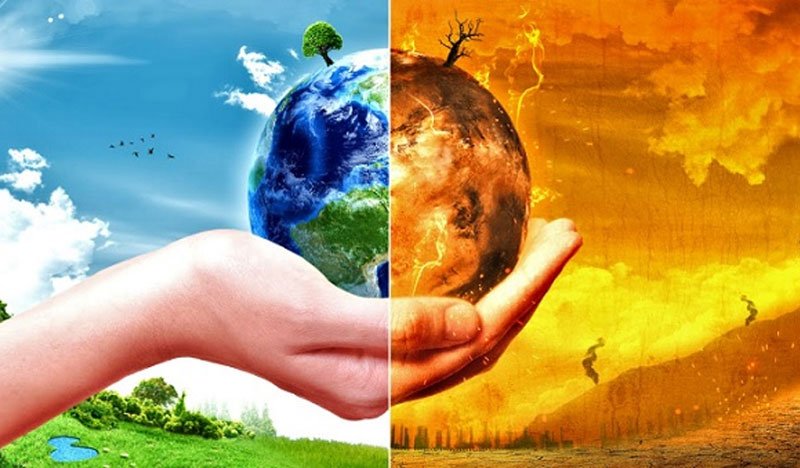
World Environment Day arrives each year with familiar pledges and predictable rhetoric but the reality it seeks to highlight is becoming increasingly difficult to ignore. The planet is warming at an alarming pace and global temperature records continue to be broken with unsettling regularity. Scientists warn that the coming years may rank among the hottest ever recorded pushing the world dangerously close to thresholds once considered critical limits.
For Pakistan, these warnings are not distant projections but lived realities. Recent heatwaves in Sindh and Balochistan have pushed temperatures close to 50°C placing immense strain on already fragile infrastructure, including water supply, electricity and healthcare systems. At the same time, the country’s dependence on the Indus basin makes it particularly vulnerable to changes in glacial reserves, which are now under serious threat due to rising temperatures.
The consequences of environmental neglect are already evident. The devastating floods of 2022 displaced millions, destroyed livelihoods and caused economic losses running into billions. Yet despite such stark reminders, environmental protection continues to remain a secondary concern in policymaking. Urban expansion proceeds with little regard for sustainability, forests continue to shrink and air pollution remains a persistent threat to public health.
A significant gap exists between policy commitments and implementation. Pakistan is a signatory to multiple international environmental agreements and global forums continue to emphasise cooperation and climate action. However, the effectiveness of these commitments is undermined by weak governance, fragmented planning and insufficient investment at the domestic level.
The issue is not merely environmental but deeply connected to national security and economic stability. The accelerating loss of glaciers in the Hindu Kush-Karakoram-Himalaya region threatens water availability for millions, while unpredictable weather patterns increase the risk of both floods and droughts. These challenges extend beyond environmental degradation, influencing food security, energy production and regional stability.
World Environment Day should serve as more than a symbolic observance. It must act as a turning point where climate concerns are integrated into every aspect of development planning. As the federal budget approaches, there is an opportunity to prioritise climate resilience through meaningful investment in disaster preparedness, water conservation, ecosystem restoration and sustainable urban planning.
Pakistan often highlights its minimal contribution to global emissions and rightly so. However, this argument must be matched by seriousness at home. Without strong domestic action, international support alone cannot address the scale of the crisis.
The time for symbolic gestures has passed. The growing environmental deficit demands urgent, coordinated and sustained action. The question is no longer whether the crisis exists but whether institutions are willing to respond with the urgency it requires.
Focus Keyword: Climate Crisis Pakistan
Keywords:
Pakistan climate change
environmental crisis Pakistan
global warming impact Pakistan
Indus basin glaciers
heatwaves in Pakistan
climate policy Pakistan
environmental governance
sustainable development Pakistan
climate resilience
World Environment Day
Moanir Abi Hadi
About Author:
Moanir Abi Hadi is a media analyst and content strategist at Asian Burg, producing insightful work on geopolitics, digital infrastructure and social change. He can be reached at info@asianburg.com