



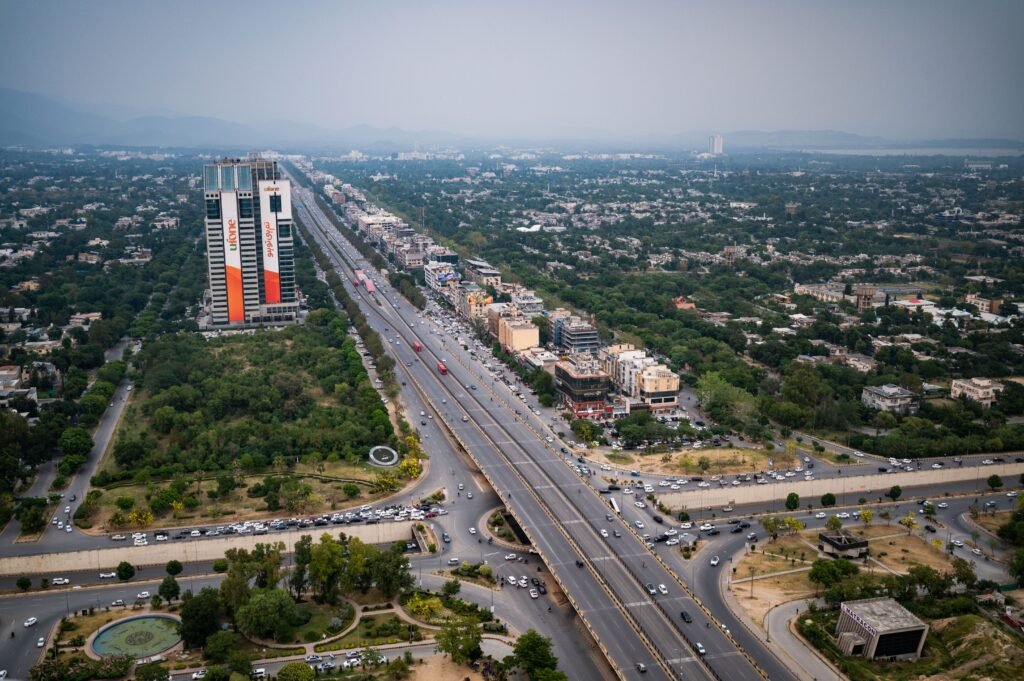
Islamabad has slowed to an unusual standstill as Pakistan’s capital prepares to host what could become a pivotal round of US–Iran negotiationsplacing the city at the centre of a highly sensitive geopolitical moment.
Luxury hotels stand unusually quiet, awaiting the arrival of diplomatic delegations, while several high end restaurants have temporarily suspended operations amid heightened security restrictions. Major roads across the city have been transformed into controlled corridors with checkpoints manned by police and military personnel significantly limiting civilian movement.
The talks are expected to address long-standing tensions between Washington and Tehran offering a rare diplomatic opening in a relationship defined by decades of mistrust. Pakistan in hosting the discussions, is widely seen as attempting to position itself as a facilitator in high-level international diplomacy.
However, uncertainty has intensified following recent remarks from US President Donald Trump, who suggested that any ceasefire framework with Iran remains conditional on progress toward a more durable and comprehensive agreement.
Security measures in Islamabad have been escalated to an exceptional level. Entire road networks remain sealed, government offices have shifted to remote operations and educational institutions across the capital have been closed. Even recreational areas including access to the Margalla Hills trails have been restricted as authorities maintain tight control over movement.
Despite widespread disruption, officials describe the moment as a rare diplomatic opportunity. Pakistan, often associated internationally with security concerns and regional instability, sees the talks as a chance to project a more constructive role on the global stage.
Analysts note that Islamabad has seldom hosted diplomacy of this magnitude. Historical precedents from the Dayton Peace Accords to Iran nuclear negotiations in Vienna underscore how host cities can become symbolic arenas where global outcomes are shaped.
Reportedly, the agenda extends beyond ceasefire discussions to include nuclear oversight, regional proxy dynamics, missile development concerns and strategic maritime routes such as the Strait of Hormuz. The breadth of issues underscores the potential global significance of the outcome.
For now, Islamabad remains in a state of suspended activity quiet, heavily secured and closely watched as the world awaits to see whether the city will witness a diplomatic breakthrough or another stalled attempt at resolving one of the world’s most enduring geopolitical confrontations.
Keywords: US Iran talks, Islamabad news, Pakistan diplomacy, Iran nuclear talks, ceasefire negotiations, Donald Trump Iran policy, Middle East tensions, global security crisis, Strait of Hormuz, US foreign policy 2026, Iran diplomacy update, international relations news, geopolitical crisis, Islamabad lockdown, Pakistan foreign policy, nuclear negotiations Iran, breaking world news, Asian Burg Global Desk
Asian Burg | Global Desk
Send your feedback via email info@asianburg.com