




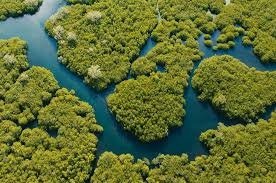
For decades, mangrove forests were among the most threatened ecosystems on Earth disappearing rapidly under the pressure of urban expansion, aquaculture and deforestation. Today, however, an unexpected reversal is taking place. Across many parts of the world, these vital coastal forests are slowly but steadily recovering.
Recent scientific research indicates that since 2010, the global rate of mangrove loss has declined significantly with some regions even witnessing net gains. This turnaround marks a rare success story in environmental conservation, driven by a combination of stronger legal protections, improved awareness and most importantly, nature’s own resilience.
Mangroves play a critical role in maintaining ecological balance. They act as natural barriers against storms, reducing the impact of cyclones, tsunamis and coastal flooding. Their dense root systems stabilise shorelines while also serving as nurseries for marine life supporting fisheries and biodiversity. Equally important is their ability to absorb carbon dioxide at levels far exceeding those of many terrestrial forests making them powerful allies in the fight against climate change.
The turning point in public perception can be traced back to major environmental disasters. Events such as the 2004 Indian Ocean tsunami and Cyclone Nargis in 2008 highlighted the protective role of mangroves, as areas shielded by these forests suffered significantly less damage. These experiences prompted governments and communities to rethink their approach towards conservation.
Policy interventions have since played an essential role. Logging bans, restoration initiatives and stricter environmental regulations have reduced large-scale destruction. Countries such as Indonesia and Myanmar have shown notable progress, where reduced deforestation has allowed mangroves to regenerate naturally.
What makes this recovery particularly remarkable is that it is not solely the result of human-led restoration. Mangroves possess an inherent ability to regrow when left undisturbed. Once pressures such as land clearing and pollution are reduced, these ecosystems can expand on their own, demonstrating a powerful capacity for self-repair.
However, this progress is uneven and fragile. Certain regions, particularly in West and Central Africa, continue to experience severe degradation due to oil pollution, industrial activity and weak enforcement of environmental laws. In addition, climate-related threats such as tropical cyclones remain a major risk, capable of causing sudden and extensive damage.
There is also a more complex dimension to this recovery. In some areas, the expansion of mangroves may be linked to environmental degradation elsewhere, such as upstream deforestation and mining that increase nutrient flow into coastal systems. This highlights the interconnected nature of ecosystems, where gains in one area may reflect losses in another.
Despite these challenges, the overall trend offers cautious optimism. The recovery of mangrove forests demonstrates that environmental damage can be reversed when human pressure is reduced and conservation efforts are sustained. It is a reminder that nature, if given the opportunity, has the capacity to heal itself.
Keywords:
mangrove restoration
coastal protection ecosystems
climate change mangroves
carbon storage forests
biodiversity conservation
coastal resilience
environment recovery
marine ecosystems
deforestation impact
nature regeneration
Asian Burg | Environment / Climate
Send your feedback via email info@asianburg.com