




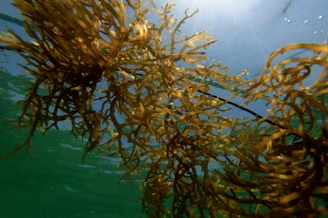
Pakistan’s coastline may be sitting on a multi-billion dollar opportunity that remains largely unused seaweed.
Seaweed is a marine plant widely used across the world in food, cosmetics, pharmaceuticals and industrial products. While the global industry continues to expand rapidly, Pakistan’s role remains minimal despite its vast marine potential.
The country has a 1,050-kilometre coastline and an Exclusive Economic Zone of nearly 290,000 square kilometres, where scientists have identified over 475 species of seaweed. Yet annual exports remain around just $2 million.
Globally, the seaweed industry is already worth around $17 billion and is projected to reach $30 billion by 2030, driven by countries like Indonesia, China and South Korea, which operate large-scale seaweed farming systems.
In contrast, Pakistan has almost no significant commercial seaweed production.
At the same time, coastal communities are under pressure. Around 1.8 million people depend on fisheries but fish stocks have declined by more than 60% due to overfishing.
Experts say seaweed farming could offer an alternative livelihood. It requires low investment, grows quickly and provides steady income opportunities for coastal populations.
Beyond economics, seaweed also has environmental benefits. It absorbs carbon dioxide, helps clean polluted water and supports marine ecosystems.
Regions such as Gwadar, Pasni, Ormara and Jiwani are considered highly suitable for seaweed cultivation due to ideal coastal conditions.
Despite this potential, Pakistan has yet to develop a structured industry around it raising questions about missed opportunities in the blue economy sector.
Keywords:
Pakistan coastline, seaweed farming, blue economy, fisheries crisis, Gwadar, Ormara, marine exports, climate benefits, $30 billion industry
Moanir Abi Hadi
Send your feedback via email info@asianburg.com