




The global race for rare earth minerals and critical resources is rapidly reshaping geopolitics, trade alliances and economic strategies. These minerals such as lithium, cobalt, nickel and copper are essential for modern technologies, including electric vehicles, smartphones, batteries, renewable energy systems and advanced defense equipment.
In recent years, the focus of global power competition has shifted from traditional oil and gas resources to critical minerals. Countries are increasingly treating these resources as strategic assets leading to what many analysts describe as “mineral diplomacy.” This new phase of competition is heavily influenced by energy transition goals and rising geopolitical tensions between major global powers.
China currently dominates the global supply chain controlling a significant share of both mining and refining processes for critical minerals. Estimates suggest that China processes around 60% of global mined materials and dominates up to 90% of refining capacity, giving it a powerful position in global supply networks. This concentration has raised concerns among Western economies about supply chain dependency and national security risks.
In response, countries such as the United States, Australia, Japan and several Southeast Asian nations are actively seeking alternative sources and partnerships. Recent global agreements and investment discussions reflect a broader effort to diversify supply chains and reduce reliance on a single dominant player. This shift is often referred to as supply chain nationalism, where nations prioritize secure access to critical resources.
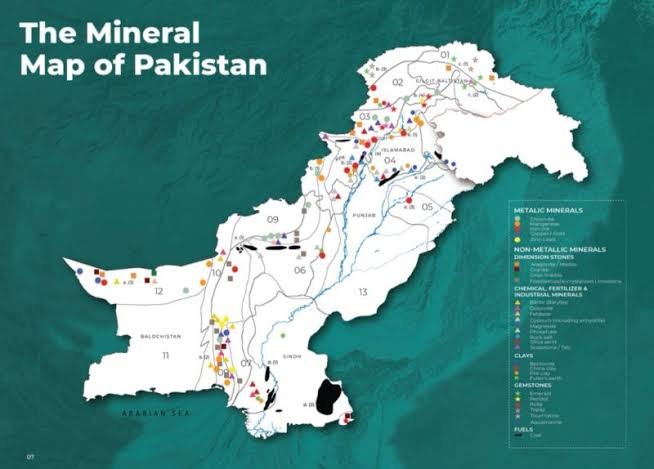
Within this global context, Pakistan is being discussed as a potential emerging participant in the critical minerals sector. While the country has historically been associated with limited mining development, its geological potential and strategic location are drawing increasing international attention. Partnerships and exploratory discussions with various countries suggest growing interest in developing Pakistan’s mineral resources.
However, experts emphasize that the mining industry is not a short-term opportunity. It requires long-term investment, including exploration, mapping, drilling, feasibility studies and regulatory approvals. Even after discovery, the transition from resource identification to commercial production can take years or even decades.
The global shift toward clean energy technologies such as electric vehicles and solar power is expected to further increase demand for rare earth elements. At the same time, geopolitical competition over supply chains is likely to intensify making mineral-rich regions more strategically important.
For countries like Pakistan, the challenge lies in balancing opportunity with infrastructure, governance and investment capacity. If managed effectively, participation in the global critical minerals market could offer long-term economic benefits. However, without proper planning and regulatory frameworks, these opportunities may remain underdeveloped.
The global race for rare earth minerals is not just about resources it is about technological power, energy security and future economic dominance. In this evolving landscape, even emerging economies are being pulled into a complex competition that will define the next phase of global development.
Keywords:
critical minerals geopolitics, Pakistan mining potential, lithium cobalt global demand, China rare earth dominance, supply chain nationalism, energy transition minerals, EV battery materials, global mineral competition, Pakistan natural resources, future of mining Pakistan
Moanir Abi Hadi
About Author:
Moanir Abi Hadi is a media analyst and content strategist at Asian Burg, producing insightful work on geopolitics, digital infrastructure and social change. He can be reached at info@asianburg.com