




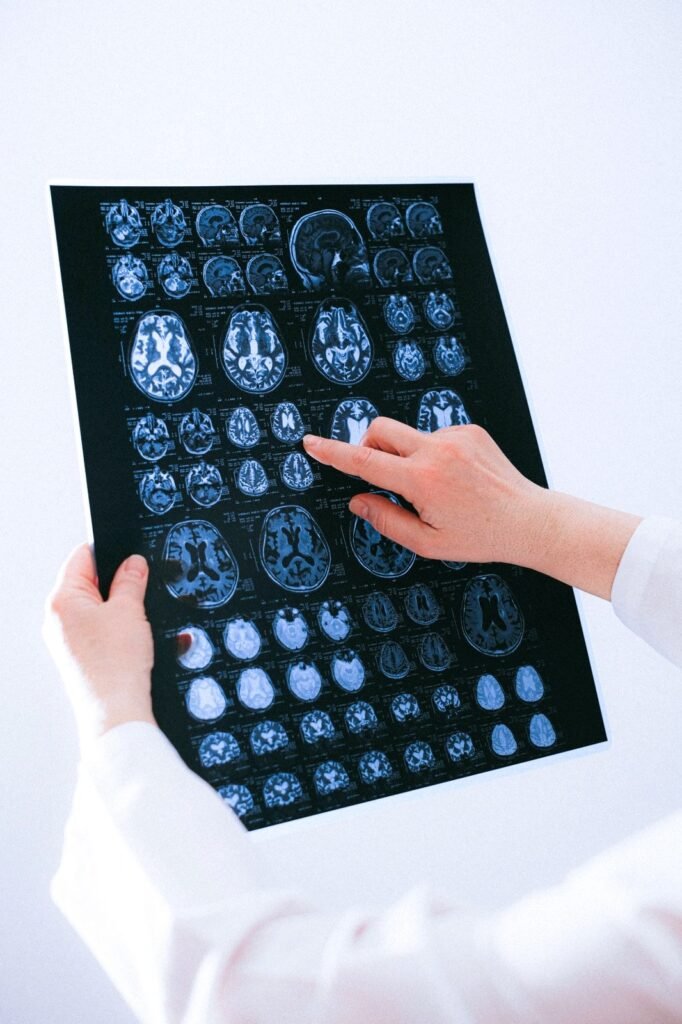
For centuries, the human brain has generally been treated as a single organ with a common developmental origin. New research led by Stanford Medicine is challenging that picture, showing that major parts of the brain emerge from two fundamentally different populations of precursor cells.
The finding does not mean that people literally have two independent brains. Instead, the research shows that the front and back portions of the brain follow separate developmental paths from the earliest stages of embryonic development.
Published Sept. 18 in Nature Neuroscience, the study could have important consequences for scientists trying to understand diseases that damage the brain stem, including amyotrophic lateral sclerosis (ALS) and spinal muscular atrophy (SMA).
Two Developmental Pathways
The adult brain is commonly divided into the forebrain, midbrain and hindbrain. The forebrain is associated with functions such as language, consciousness, reasoning and other forms of higher-level processing. The hindbrain, including structures commonly associated with the brain stem, helps control essential functions such as breathing, heart rate, swallowing and other automatic processes.
For decades, developmental biology has generally assumed that these regions ultimately emerged from a common early population of neural progenitor cells.
Stanford researchers found evidence for a different model.
Working with developing mouse embryos, the team identified two distinct populations of neural progenitor cells. Cells expressing the gene Otx2 were associated with the future forebrain and midbrain, while cells expressing Gbx2 were committed to developing into the hindbrain.
The two populations remained separate from the earliest stages examined by the researchers.
The team also found major differences in chromatin the DNA-protein structure that influences which genes cells can access. Those differences appear to establish separate developmental identities early in embryonic development.
That discovery may help explain a longstanding problem in stem-cell research.
Why Growing Hindbrain Neurons Has Been Difficult
Scientists have become increasingly skilled at producing specialized human neurons from pluripotent stem cells. Yet generating authentic hindbrain motor neurons has proved challenging.
The Stanford researchers suggest that one reason is that scientists may have been attempting to push forebrain or midbrain progenitor cells toward a fate they were never naturally capable of adopting.
Rather than forcing an existing neural population to change identity, the researchers went back to the earliest stages of development.
Using what they learned about the two developmental pathways, they were able to guide human pluripotent stem cells into functional hindbrain motor neurons in laboratory conditions.
The resulting cells displayed electrical activity and produced proteins associated with hindbrain regions involved in controlling facial and swallowing muscles.
That could provide researchers with a new laboratory model for studying diseases that affect these neurons.
Potential Relevance to ALS and SMA
The hindbrain contains neurons that are essential for swallowing, speech and breathing. Their deterioration can have devastating consequences in neurological disorders.
In SMA, a genetic disease that can cause severe weakness and loss of motor function, affected motor neurons can progressively stop functioning. ALS can also damage motor neurons and eventually interfere with swallowing and breathing.
Researchers have traditionally faced a major obstacle in studying these cells: obtaining relevant human brain-stem tissue from living patients is extremely difficult.
Growing specific hindbrain neurons in the laboratory could therefore give scientists a way to examine how disease processes affect these cells, test biological mechanisms and potentially evaluate future treatments.
The Stanford team has emphasized that the work is a research platform, not an established therapy. Any treatment emerging from these findings would require substantial additional laboratory and clinical research.
An Evolutionary Mystery
The researchers also investigated whether the two-part developmental pattern was unique to humans.
Their analysis extended across hundreds of millions of years of evolutionary history. Similar patterns were identified in animals including chickens and zebrafish, as well as in acorn worms, which share a distant evolutionary relationship with humans.
The findings suggest that the separation between these neural systems is an ancient feature rather than a recent development in human evolution.
From this perspective, the modern brain may represent an evolutionary solution in which previously distinct nervous systems became integrated into a structure that operates as a unified whole.
That does not make the brain less integrated. It changes the question of how that integration arose.
A New Direction for Brain Research
The significance of the discovery extends beyond one developmental diagram.
Understanding precisely where different brain cells originate can influence how scientists build laboratory models of neurological disease. If researchers begin with the correct developmental population, they may be able to produce cells that more accurately reproduce the biology of the tissue they want to study.
The Stanford researchers also pointed to the hindbrain’s role in regulating hunger and other automatic physiological functions. This raises potential research connections with metabolic disorders and therapies that act on neural circuits involved in appetite.
The next questions are more detailed: how the separate developmental programs interact, how the spinal cord develops in relation to them and why specific hindbrain neurons become vulnerable in diseases such as ALS and SMA.
The broader lesson is that understanding the adult brain may require scientists to look much further back to the earliest decisions made by embryonic cells.
The brain may work as one extraordinarily interconnected system. But its origins, according to this new research are more divided than scientists once believed.
Keywords: human brain development, Stanford brain study, two brain origins, hindbrain neurons, forebrain development, ALS research, spinal muscular atrophy, stem cells, brain development, Nature Neuroscience
Asian Burg / Knowledge Hub