



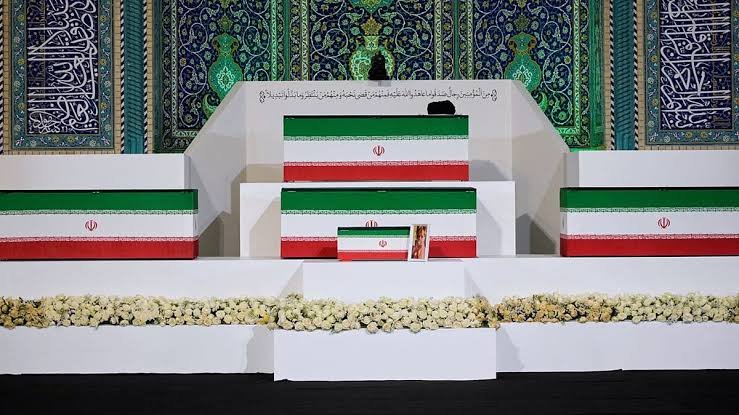
The funeral ceremonies of Ayatollah Ali Khamenei are taking place across a series of cities that hold deep political, religious and historical importance. The selected locations reflect key aspects of Iran’s identity linking state authority with religious tradition and regional influence.
The journey begins in Tehran, the country’s political centre. As the capital, it hosts major institutions including the presidency, parliament and military leadership. The public viewing at the Grand Mosalla, a major venue for national and religious gatherings, highlights the connection between governance and faith. Large public processions in the city are often associated with national unity and serve as an opportunity for citizens to participate in collective ceremonies.
Qom, the next significant stop, is widely recognised as the centre of Shia scholarship in Iran. It houses major seminaries and has played a central role in shaping the country’s religious leadership. The city is also home to the shrine of Fatima Masumeh, an important religious site that attracts pilgrims throughout the year. Including Qom in the funeral route emphasises the religious foundations of leadership in the Islamic Republic.
Karbala, located in Iraq, holds a unique place in Shia Islam. It is the site of the shrine of Imam Hussein, whose martyrdom is a defining moment in Islamic history. Ceremonies held in Karbala connect the funeral to broader themes of sacrifice and spiritual devotion, extending its significance beyond national boundaries.
Najaf, also in Iraq, is another key religious centre. It is home to the shrine of Hazrat Ali and is considered one of the most important hubs of Shia learning globally. Many prominent clerics have studied and taught there making it a symbol of religious authority. Its inclusion highlights connections between Iran and the wider Shia community.
The final stage of the journey takes place in Mashhad, one of Iran’s holiest cities. It is home to the shrine of Imam Reza, which draws millions of visitors each year. Mashhad also holds personal significance, as it is the birthplace of Ayatollah Khamenei. Burial in this city brings together personal history and religious importance.
Overall, the funeral route reflects a combination of political, spiritual and cultural elements. Each city contributes to a broader understanding of Iran’s religious landscape and its connection to regional traditions. The selection of these locations demonstrates how geography, faith and history intersect in major national events.
Keywords:
Iran funeral route, Khamenei funeral cities, Tehran Qom Karbala Najaf Mashhad significance, Shia holy cities, Iran political religious sites, Middle East religious geography
Asian Burg| World