




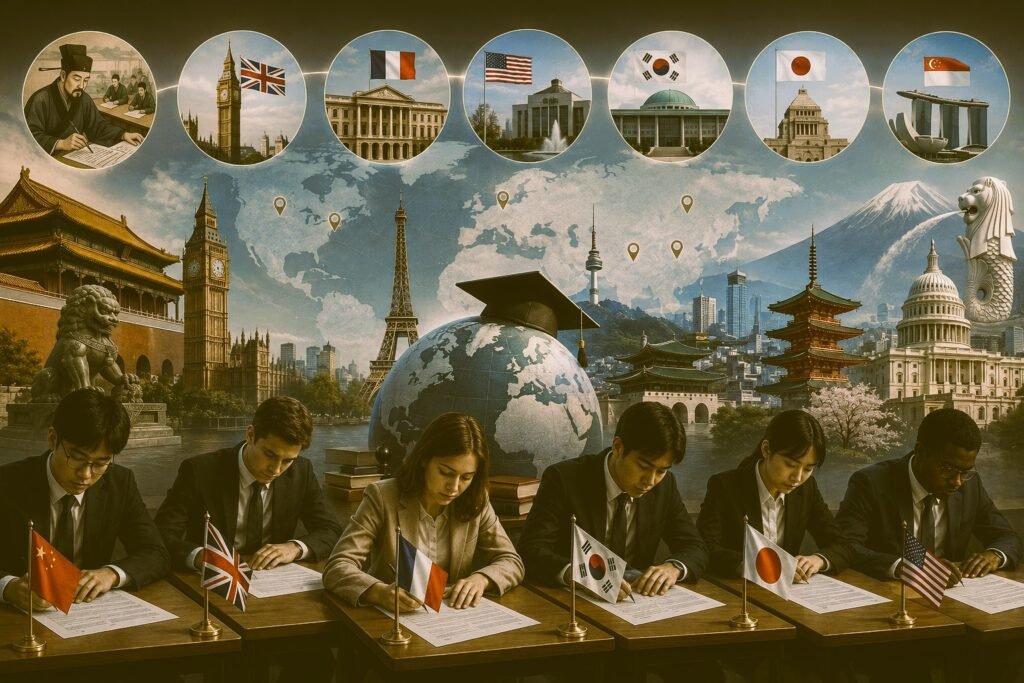
Civil service examinations have long been regarded as one of the most prestigious pathways into government roles offering individuals the opportunity to shape public policy and administration. While each country has its own approach, the core objective remains the same: identifying capable individuals who can manage complex state functions and contribute to governance.
The concept of recruiting officials through structured examinations dates back centuries. One of the earliest known systems emerged in ancient China, where a rigorous testing framework was used to select scholars for administrative roles. This model, built on knowledge of philosophy, governance and literature, influenced similar systems across the world and laid the foundation for merit-based bureaucracy.
In many countries today, civil service recruitment remains highly competitive. Some systems rely heavily on written examinations that test analytical ability, subject knowledge and decision-making skills. Others incorporate interviews, psychological assessments and practical evaluations to measure leadership potential and adaptability.
The United Kingdom, for instance, uses a structured programme that focuses less on a single exam and more on a combination of aptitude tests, group exercises and interviews. Candidates are evaluated for their problem-solving skills, communication abilities and leadership qualities before being placed in various government departments for training and progression.
France historically relied on an elite administrative school that served as a gateway to top government positions. Admission was extremely selective and graduates often moved into influential roles in politics and administration. Although the system has evolved in recent years, competitive entry into public service remains a defining feature of the country’s governance structure.
In contrast, the United States follows a more decentralised approach. Instead of a single nationwide examination, different government agencies conduct their own recruitment processes. These may include specialised tests, interviews and training programmes depending on the role. Positions in diplomacy, intelligence and federal administration each have distinct selection criteria, reflecting the diversity of the system.
Asian countries such as South Korea and Japan maintain rigorous examination-based recruitment models with candidates often spending years preparing. Success in these exams is associated with high social status and access to influential positions within the government. These systems emphasise discipline, knowledge and perseverance.
Modern China continues to conduct one of the largest recruitment exams globally, attracting millions of applicants each year. The process evaluates a wide range of skills, including reasoning, policy understanding and communication abilities. Government positions remain highly sought after due to their stability and prestige.
Some countries, like Singapore, adopt a more holistic approach by identifying talent early. Academic performance, leadership qualities and scholarship programmes play a significant role in selecting future administrators. Candidates are often groomed over time through structured career pathways within the public sector.
European institutions also operate their own competitive selection systems to recruit officials for multinational governance. These processes typically involve multilingual testing, analytical reasoning and scenario-based assessments, reflecting the complexity of working across diverse political environments.
Despite differences in structure, civil service recruitment worldwide has evolved to meet modern demands. Governments increasingly value skills beyond academic knowledge including emotional intelligence, adaptability and strategic thinking. As global challenges such as climate change, digital transformation and international relations grow more complex, the expectations placed on public administrators continue to expand.
The enduring appeal of civil service careers lies in their combination of responsibility, stability and influence. While the paths to entry may differ, the aspiration to contribute to national development and public welfare remains a common thread across countries. Competitive selection processes ensure that only the most capable candidates take on these critical roles reinforcing the importance of merit in governance systems around the world.
Keywords
IAS equivalent exams worldwide, civil service recruitment global, UPSC comparison international, China imperial exam history, UK Fast Stream programme, US foreign service exam, government jobs worldwide, competitive exams for bureaucracy, public administration careers, global civil services systems
Asian Burg /Education