




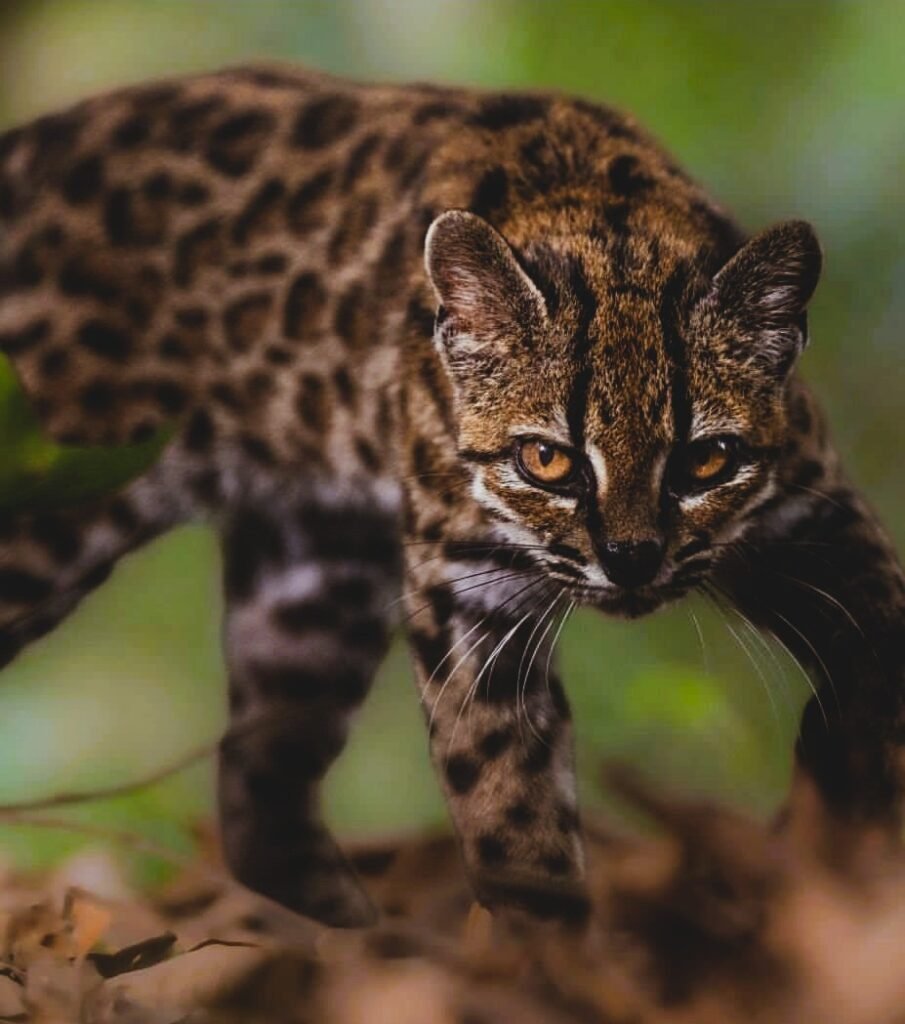
Scientists have identified a previously unknown species of wild cat living in Bolivia’s mountainous Yungas forests, marking the first formal description of a new living cat species in more than a century.
Named the Tilcayo cat, the animal has been given the scientific name Leopardus tilcayo, preserving the name used by local communities. Researchers say genetic evidence confirms that it is distinct from other members of the tiger cat group found across South America.
The discovery also draws attention to the fragile ecosystem where the small feline lives.
A small cat with a hidden identity
The Tilcayo cat is relatively small, measuring about 46 centimetres in length and weighing around 1.4 kilograms. Its light-brown coat is covered with irregular rosettes.
It was found in Bolivia’s Yungas, a region known for steep mountains, dense forests, high humidity and frequent cloud cover.
At first glance, the animal does not appear dramatically different from other tiger cats. That is one reason researchers needed genetic analysis to establish its identity.
Tiger cats are considered a group of “cryptic species” because closely related species can look extremely similar. For decades, scientists had treated several populations as belonging to a much smaller number of species.
Researchers studying the Bolivian animals noticed that their characteristics did not fully match descriptions based largely on cats from Brazil. That prompted a broader investigation into exactly which tiger cat population was living in Bolivia.
DNA revealed the difference
The research team examined genetic material from 38 cats collected across several South American countries. The sample included eight museum specimens.
The analysis found that what had previously been considered tiger cats actually represented five genetically distinct species.
The Bolivian lineage was estimated to have separated from other tiger cats about 1.4 million years ago, providing evidence of a long period of evolutionary independence.
Researchers also identified a previously unrecognized tiger cat subspecies in Peru’s Yungas. It was named Leopardus tigrinus antisuyo, referring to Antisuyu, a region associated with the former Inca Empire.
Scientists still know little about the Tilcayo
Despite the genetic evidence confirming its distinct identity, much about the newly described species remains unknown.
Researchers have examined only two live individuals in detail, along with a limited number of camera-trap records.
One of the known cats is a 10-year-old male that now lives at Senda Verde Wildlife Sanctuary after previously being kept by a local family.
Camera traps suggest the species may be more active at night. Samples of its droppings have also contained remains of small rodents, indicating that these animals may form part of its diet.
More research will be needed to determine the Tilcayo cat’s population size, range, reproductive behavior and ecological role.
Discovery comes with a conservation warning
The identification of a new species does not necessarily mean scientists have discovered a healthy population.
The Yungas is under growing pressure from deforestation, agricultural expansion, human-caused fires and mining. Researchers say protecting remaining native forest and maintaining links between fragmented habitats will be important for wildlife in the region.
The discovery could also change how conservation authorities assess the risk facing tiger cats.
The International Union for Conservation of Nature currently assesses tiger cats through two vulnerable species with declining populations. Researchers have submitted their findings to the organization ahead of a future review that could assess the newly recognized lineages separately.
A species that appeared relatively secure when grouped with other populations could face a very different assessment when considered on its own.
A reminder of how much remains undiscovered
The Tilcayo cat’s discovery illustrates how genetic research can reveal biodiversity that is difficult to identify from appearance alone.
Scientists believe many species around the world remain undocumented, particularly in remote forests and other ecosystems that are difficult to study.
That creates a race against time. Habitat loss, fires, mining and other human pressures can threaten populations before researchers even know they exist.
The discovery of Leopardus tilcayo therefore represents more than the addition of another name to a scientific catalogue. It provides a new glimpse into the biodiversity of Bolivia’s forests and a reminder that some of the world’s wildlife remains hidden in places increasingly under pressure.
Keywords: new wild cat species, Bolivia wild cat, Tilcayo cat, Leopardus tilcayo, Yungas forest, tiger cats, wildlife discovery, biodiversity, conservation, endangered species
Asian Burg/ Science