




Munir Hussain Chopra
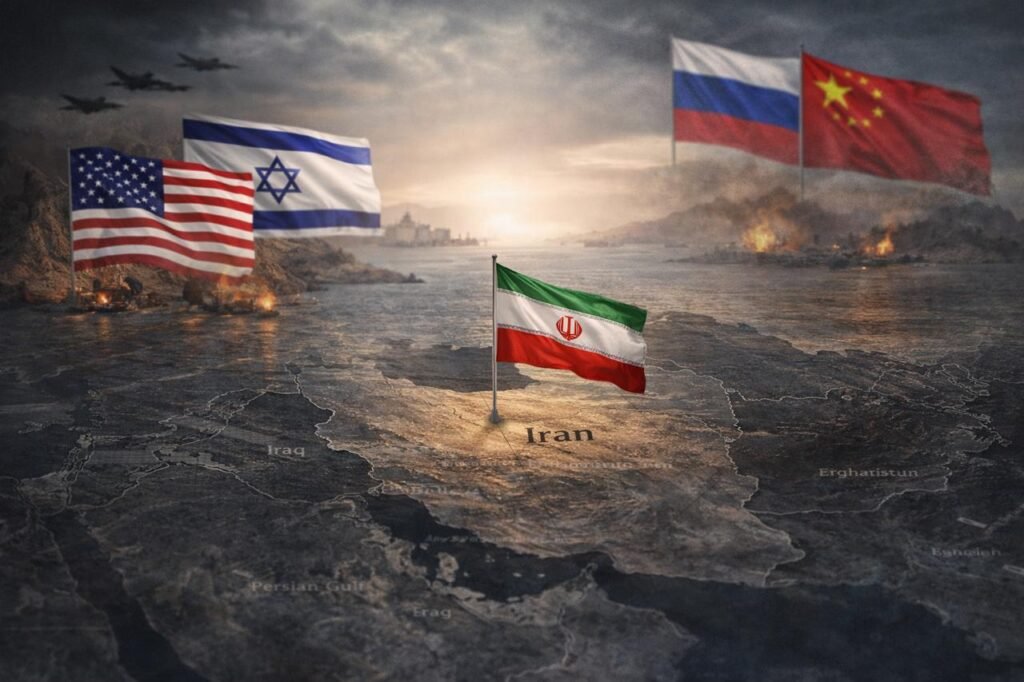
The current confrontation involving Iran, Israel and the United States highlights a harsh but familiar reality of international politics: alliances in geopolitics are rarely unconditional. Despite years of rhetoric about strategic partnerships, Iran appears to be confronting its adversaries largely on its own.
Washington and Tel Aviv are coordinating pressure on Tehran while Western allies such as Britain have reportedly provided logistical and operational support. Yet the more intriguing question lies elsewhere where are Iran’s powerful partners, Russia and China at this decisive moment?
For years, Tehran has cultivated close relations with Moscow. Their cooperation deepened after Russia’s invasion of Ukraine particularly through the supply of Iranian drones which became an important element of Russia’s battlefield tactics. Political leaders in both countries have repeatedly described their relationship as a “strategic partnership.” However, when the prospect of direct confrontation with the United States emerges, Moscow’s support suddenly becomes cautious and symbolic.
Statements of solidarity from the Kremlin are plentiful but concrete military assistance is conspicuously absent. The explanation is straightforward. Russia is already deeply committed to the war in Ukraine and cannot afford to open another direct front against Western power in the Middle East. Moreover, despite political alignment, Russia’s economic relationship with Iran remains relatively limited. Moscow values Tehran as a partner that complicates Western influence in the region but not enough to risk a wider war.
China’s approach is even more calculated. Beijing is arguably Iran’s most important economic partner purchasing a significant share of its oil exports and maintaining long-term investment agreements. Yet China’s strategy in the Middle East has always prioritized stability and uninterrupted energy flows. A large-scale war in the Gulf particularly one that threatens the Strait of Hormuz through which a major portion of global oil trade passes, would damage China’s own economic interests.
For that reason, Beijing prefers diplomacy, economic engagement and carefully worded criticism of Western policies rather than military involvement. China may provide Iran with political cover in international forums and maintain economic ties despite sanctions but it has shown little appetite for confronting the United States militarily over Tehran.
This moment exposes an uncomfortable truth for Iran. Strategic partnerships do not automatically translate into wartime alliances. Russia and China may view Iran as a useful geopolitical counterweight to Western influence but they also calculate costs with cold precision. Neither country appears willing to risk a direct military confrontation with the United States simply to defend Tehran.
The crisis highlights the limits of geopolitical rhetoric. In global power politics, support often stops where national interests begin. Iran may have partners but when the stakes escalate to open conflict, those partnerships reveal their boundaries.
The writer is a civil servant and can be reached at civilservant53@gmail.com.