



Munir Hussain Chopra
Iran’s military system stands apart from most countries because it operates through two parallel armed forces: the regular army known as Artesh and the Islamic Revolutionary Guard Corps (IRGC). Both institutions have their own command structures and operate directly under the authority of Iran’s Supreme Leader. This arrangement reflects not only a military strategy but also a political design intended to safeguard the country’s governing system.
The Artesh functions as Iran’s conventional military. With roughly 420,000 personnel across its ground forces, navy, air force and air defense units, its primary mission is straightforward which is to protect Iran’s territorial borders and preparing for traditional military conflict. In essence, it performs the same role as regular armed forces in most states.
Alongside it, stands the IRGC, created in the aftermath of the 1979 Islamic Revolution. At the time, the new revolutionary leadership feared that elements within the traditional army might still be loyal to the former monarchy of Shah Mohammad Reza Pahlavi. Establishing a parallel force ensured that the revolution itself would have a dedicated guardian.
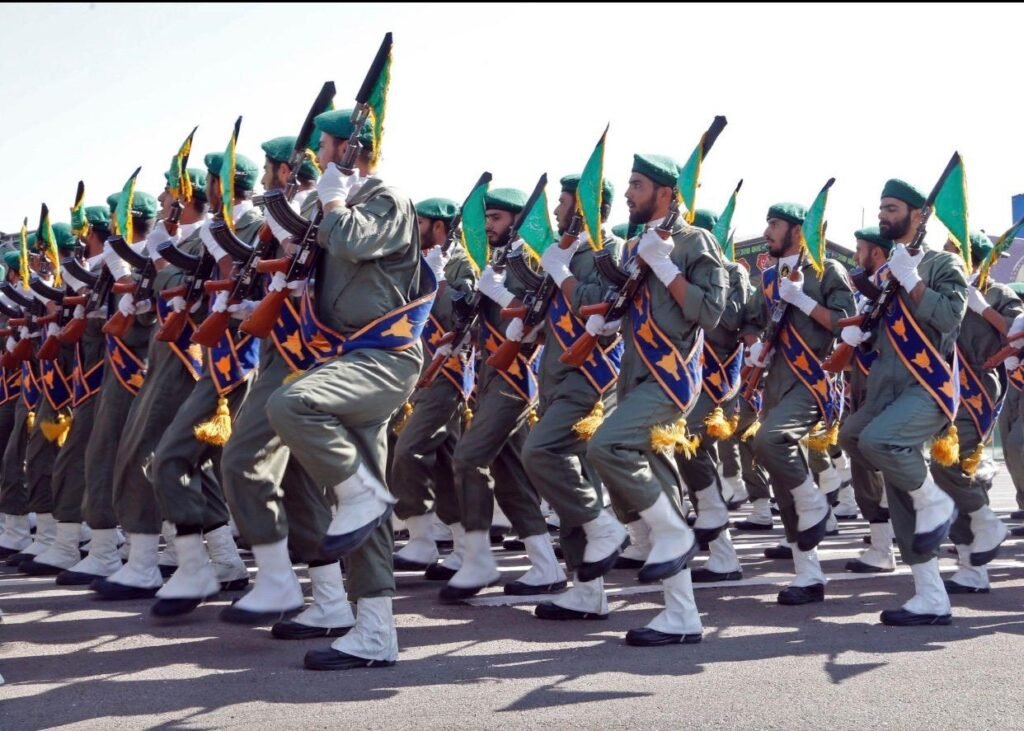
Over the decades, the IRGC has developed into a powerful institution with an estimated 640,000 members including its elite Quds Force and the large Basij volunteer reserve. Unlike the regular army, its responsibilities go beyond defending borders. The IRGC is tasked with protecting the Islamic political system and the ideological foundations of the revolution.
A particularly significant component of the IRGC is its Aerospace Force which oversees Iran’s missile and drone capabilities. These programs form a key pillar of Iran’s deterrence strategy particularly in the context of tensions with regional and global rivals.
Iran’s dual military structure therefore represents a deliberate balance between traditional national defense and ideological security. While the Artesh focuses on protecting the state’s physical borders, the IRGC safeguards the revolutionary system that defines the state itself. This combination has become a defining feature of Iran’s security architecture and continues to shape its strategic posture both at home and abroad.
The writer is a civil servant with an interest in international affairs and strategic studies. He can be reached at civilservant53@gmail.com.